The best budget digital pianos under $500 in 2026 offer a realistic playing experience with essential features, making them accessible for aspiring musicians. Top models include the Roland FP-10, known for its superior PHA-4 Standard key action; the Yamaha P-143/P-145, recognized for dependable playability; and the Casio CDP-S160, praised for its compact design and portability. These instruments provide fully weighted 88-key actions and quality sound engines, crucial for developing proper piano technique without a significant financial investment.
Understanding Digital Pianos
A digital piano is an electronic musical instrument designed to emulate the sound and feel of an acoustic piano. Unlike traditional acoustic pianos, digital pianos produce sound through high-fidelity samples, often recorded in professional studios. This technology allows for features like volume control, headphone jacks for silent practice, and various instrument sounds that acoustic pianos lack.
The history of digital pianos began in the 1970s with basic electronic sounds. Decades of technological innovation, especially in sound sampling and keyboard action mechanics, have dramatically improved their realism and functionality. Today, digital pianos closely replicate the complex nuances of an acoustic grand piano. For see our digital pianos recommendations on this site.
Acoustic pianos offer an unparalleled organic sound and natural resonance but are expensive to purchase and maintain, require regular tuning, are heavy and non-portable, and have unadjustable volume. Digital pianos, particularly budget models, overcome these limitations. They are significantly more affordable, require no tuning or complex maintenance, and offer versatile features such as adjustable volume, headphone connectivity, and a selection of different instrument voices. For beginners and those on a budget, digital pianos provide an authentic enough experience to build proper technique and musicality without the logistical and financial burdens of an acoustic instrument.
Key Types of Digital Pianos
Digital pianos come in various forms, each designed for different purposes. Understanding these types helps identify which style best suits your needs, especially when sticking to a budget under $500.
Portable Digital Pianos (Slab Pianos)
Portable digital pianos, or “slab” pianos, are the most common type under $500. These instruments prioritize flexibility and ease of transport.
- Characteristics: They typically feature a standalone keyboard unit without an integrated stand or pedal unit. They are lightweight and compact, making them easy to move or transport for gigs or lessons. Many models can be battery-powered, enhancing portability.
- Advantages: Main benefits include affordability, portability, and space-saving design. They are excellent for beginners, students, or musicians with limited living space. Many offer fully weighted 88-key actions and quality sound engines.
- Disadvantages: They often require separate purchases for a stand, bench, and sustain pedal, adding to the overall cost. Built-in speakers might be less powerful than console models but are sufficient for personal practice.
- Best Suited For: Absolute beginners, students, musicians needing a practice instrument, those with limited space, or performers requiring a lightweight option for gigs.
Other types like Home/Console Digital Pianos and Stage Pianos generally exceed the under $500 budget. Home or console digital pianos resemble traditional upright pianos with integrated stands and larger speaker systems. Stage pianos are built for professional performance, focusing on durability and powerful sound engines. For the best value under $500, portable digital pianos are the primary focus.
Essential Features for Budget Digital Pianos
|
Our Picks for the Best Digital Piano in 2026
As an Amazon Associate I earn from qualifying purchases.
|
||
| Num | Product | Action |
|---|---|---|
| 1 | Yamaha 88-Key Digital Piano with Weighted Keys, Compact Design, Bluetooth, Keyboard, Music Rest, Sustain Foot Switch, and Built-in Speakers for Home Practice or Travel P145BT |

|
| 2 | 61 keys keyboard piano, Electronic Digital Piano with Built-In Speaker Microphone, Sheet Stand and Power Supply, Portable piano Keyboard Gift Teaching for Beginners |
|
| 3 | Yamaha 88-Key Weighted Portable Digital Piano Keyboard with Music Rest, Sustain Foot Switch, Built-in Speakers, USB Connectivity, Black (P45B) |
|
| 4 | Yamaha P225 88-Key Digital Piano with Weighted Keys, Portable Design, Keyboard, Music Rest, Sustain Foot Switch, and Built-In Speakers, Black (P225B) |
|
| 5 | Rhymo Folding Piano Keyboard, 61 Keys Sensitive Electric Piano, Weighted Portable Electric Keyboards with Bluetooth MIDI, Digital Foldable Keyboard for Beginner (Black) |
|
| 6 | Portable Piano Keyboard, Semi-Weighted Folding Digital Piano 88 Key, Full Size, Wood Grain, Electric Piano Keyboard w/MIDI Bluetooth, Suitable for Adult, Toddler |
|
| 7 | Alesis Melody 61 MK4 Keyboard Piano for Beginners with 61 Keys, Speakers, Stand, Bench, Headphones, Tablet/Sheet Music Stand, 300 Sounds and Music Lessons |
|
| 8 | STRICH 88 Key Digital Piano Foldable Full Size Electric Keyboard with Semi-Weighted Sensitive Keys, Portable Electric Piano Set for Beginner, Bundle with Sustain Pedal, Headphones, Music Rest, SEP-88F |
|
| 9 | RockJam RJ761 61 Key Keyboard Piano with Keyboard Bench, Digital Piano Stool, Sustain Pedal, Headphones & Lessons |
|
| 10 | Roland FP-10 | Compact 88-Note Digital Piano | SuperNATURAL Piano Tones | Authentic Acoustic Feel Keyboard | Great for Beginners & Experienced Players | Bluetooth & MIDI Connectivity |
|
When investing in a digital piano under $500, understanding which features truly matter for a quality playing and learning experience is crucial. Prioritizing these elements ensures you get the most out of your budget.
Key Action and Feel
This is arguably the most critical feature, as it dictates how responsive and realistic the piano feels.
- 88 Fully Weighted Keys: For proper piano technique, an 88-key keyboard with fully weighted keys is essential. These keys mimic the resistance of acoustic piano hammers, with lower notes feeling heavier and higher notes lighter. This “graded hammer action” is vital for developing finger strength and control. Look for terms like Graded Hammer Standard (GHS) from Yamaha, PHA-4 Standard from Roland, or Scaled Hammer Action from Casio.
- Sensor Systems: Most budget digital pianos use a 2-sensor key detection system. However, some advanced models, like the Roland FP-10, feature a 3-sensor system, allowing for more accurate detection of rapid key repetitions and subtle dynamics, a feature usually found in more expensive instruments.
- Key Material/Texture: Some models, like the Roland FP-10, offer synthetic ivory or ebony textures on the keys. This provides a more authentic grip and helps absorb moisture during extended playing sessions.
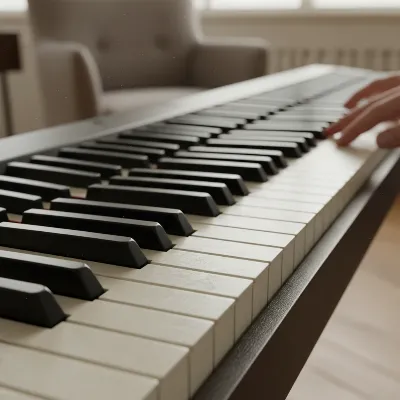 A close-up of fully weighted digital piano keys, showing the texture and depth, emphasizing the feel and responsiveness
Sound Quality
While budget models won’t have vast sound libraries, good core piano tones are paramount.
- Sampling Technology: Reputable brands employ advanced sampling technologies (e.g., Yamaha’s AWM Stereo Sampling, Roland’s SuperNATURAL Piano, Casio’s AiR Sound Source) to capture the richness and resonance of acoustic grand pianos.
- Number of Tones/Voices: Focus on the quality of primary piano sounds. A smaller selection of excellent quality sounds (grand piano, electric piano, organ, strings) is better than a large library of mediocre ones.
- Polyphony: This refers to the number of notes a digital piano can produce simultaneously. A minimum of 64-note polyphony is recommended for beginners, allowing for sustained notes and complex chords without notes dropping out. Ideally, look for 128 notes for more intricate pieces or when layering sounds.
Connectivity and Learning Tools
Modern digital pianos offer features that enhance the learning experience and expand creative possibilities.
- Headphone Jacks: Essential for silent practice, allowing you to play anytime without disturbing others.
- USB Connectivity (MIDI/Audio): A USB-MIDI port allows connection to computers for use with music learning software, digital audio workstations (DAWs), and educational apps. Some models also offer USB audio, letting you record your playing directly to a computer.
- Bluetooth MIDI: Found in some models like the Roland FP-10 and Casio PX-S1100 (though the latter might be slightly over $500), Bluetooth MIDI enables wireless connection to apps for lessons or music production.
- Built-in Features: A metronome is crucial for rhythm practice. Recording features allow you to listen back to your playing and identify areas for improvement. Dual Mode (layering two sounds) and Split Mode (dividing the keyboard for two different sounds) add versatility. Duo Mode splits the keyboard into two identical pitch ranges, perfect for student-teacher lessons.
Design and Portability
For under $500, most options will be portable slab-style pianos.
- Compact and Lightweight: Look for models that are easy to fit into your living space and simple to transport. Weights typically range from 20-30 lbs for portable models.
- Built-in Speakers: Decent built-in speakers (e.g., 6W+6W or higher) are important for clear sound during practice without headphones.
- Battery Power Option: Some ultra-portable models offer battery power, adding convenience for playing outdoors or where power outlets are scarce.
Top Digital Pianos Under $500 for 2026
Several manufacturers offer excellent digital pianos within the sub-$500 category for 2026, combining quality features with remarkable affordability. Here are some of the standout models:
Roland FP-10
Often hailed as a benchmark in the budget category, the Roland FP-10 consistently receives high praise.
- Strengths: Its defining feature is the PHA-4 Standard keyboard action, which includes Roland’s escapement mechanism and synthetic ivory key surfaces, providing a highly realistic feel, typically found in more expensive models. It also boasts a 3-sensor detection system for superior expressiveness and Roland’s SuperNATURAL sound engine, known for its rich and nuanced piano tones. Bluetooth MIDI connectivity is a bonus for integrating with apps.
- Considerations: While the key action and sound are top-tier for the price, its built-in speakers are relatively modest at 6W+6W compared to some competitors.
Yamaha P-143 / P-145 (and predecessors P-45/P-71)
Yamaha is a household name in musical instruments, and their P-series (Portable) offers reliable budget options. The P-143 and P-145 are the latest iterations, building on the success of the P-45 and P-71.
- Strengths: These models feature Yamaha’s Graded Hammer Compact (GHC) or Graded Hammer Standard (GHS) action, providing a fully weighted feel that mimics an acoustic piano. Yamaha’s Advanced Wave Memory (AWM) sampling ensures authentic piano sounds. They are known for their durability and straightforward design, making them excellent choices for beginners. The P-143 is often highlighted as a best-seller due to its balanced features and price.
- Considerations: The GHC/GHS action, while good, may not feel as refined as Roland’s PHA-4. They typically use a 2-sensor system. The polyphony might be 64-note on some earlier models.
Casio CDP-S160
Casio’s CDP-S series is renowned for its compact and sleek designs, making them ideal for small spaces.
- Strengths: The CDP-S160 is remarkably slim and lightweight, often featuring a scaled hammer-action keyboard that offers a realistic touch in a smaller footprint. Casio’s AiR Sound Source delivers quality piano tones. A notable advantage is the option for battery power, enhancing its portability. It typically offers 64-note polyphony.
- Considerations: While the scaled hammer action is good for portability, some players might find it slightly less robust than full hammer actions from other brands.
Korg B2
Korg offers a strong contender in the budget digital piano market with the B2.
- Strengths: The Korg B2 features Korg’s Natural Weighted Hammer (NH) action, providing a realistic playing feel. It often boasts powerful speakers for its class and a good selection of high-quality sounds. It offers 120-note polyphony, which is generous for its price point.
- Considerations: Some users might find its feature set more minimal compared to other brands, focusing primarily on core piano functions.
Donner DEP-20 & Alesis Prestige Artist
For those seeking more features at an extremely competitive price point, brands like Donner and Alesis offer compelling alternatives.
- Donner DEP-20: This model often surprises with its extensive features for its price, including 88 hammer action keys, 128-note polyphony, numerous tones, an LCD screen, and a MIDI recorder.
- Alesis Prestige Artist: Known for offering significant value, the Alesis Prestige Artist typically includes 88 hammer-action keys, 128-note polyphony, many voices, and powerful speakers.
- Considerations for both: While feature-rich and affordable, the key action and sound quality may not be as refined or nuanced as those from the more established brands like Roland, Yamaha, or Casio. They represent excellent entry-level options for tight budgets where a wide feature set is a priority.
Brand Comparison at a Glance
Choosing the right brand often comes down to personal preference for key feel and sound. Here’s a quick comparison of the leading brands offering digital pianos under $500:
| Brand | Key Action (Common in <$500) | Sound Engine | Polyphony (Common in <$500) | Connectivity Highlights | Price Range (Under $500) |
|---|---|---|---|---|---|
| Roland | PHA-4 Standard (3-sensor) | SuperNATURAL Piano | 96 notes | Bluetooth MIDI, USB-MIDI | High-end of budget |
| Yamaha | GHS/GHC (2-sensor) | AWM Stereo Sampling | 64-192 notes | USB-MIDI | Mid-range to high-end |
| Casio | Scaled Hammer Action (2/3-sensor) | AiR Sound Source | 64 notes | USB-MIDI, (some with battery power) | Mid-range |
| Korg | Natural Weighted Hammer (NH) | Stereo PCM | 120 notes | USB-MIDI | Mid-range |
| Donner | Hammer Action | Custom samples | 128 notes | USB-MIDI | Low-end |
| Alesis | Hammer Action | Custom samples | 128 notes | USB-MIDI, Bluetooth MIDI (Artist) | Low-end |
This table highlights that while all offer 88 weighted keys, the quality and sophistication of the action and sound engine can vary, with Roland often providing a premium feel even at the entry-level.
Investing Wisely: What to Expect Under $500
When shopping for a digital piano under $500, managing your expectations is key to making a satisfactory purchase. While this budget offers fantastic value, it’s important to understand what you’re getting and where compromises might occur.
Firstly, prioritize key action and sound quality above all else. A realistic touch and authentic piano sound are fundamental for learning and enjoyment. A piano with a less realistic feel or poor sound can hinder your progress and dampen your motivation. A vast number of extra sounds or flashy features might seem appealing, but if the core piano experience isn’t solid, these additions will matter little. For this reason, models from established brands like Roland, Yamaha, and Casio are often recommended, as they excel in these core areas even in their budget offerings.
Secondly, be prepared for potential accessory costs. Many portable digital pianos under $500 come as standalone units. This means you will likely need to purchase a sustain pedal (essential for piano playing), a keyboard stand, and a bench separately. A good pair of headphones is also a wise investment for private practice. Factor these additional costs into your total budget to avoid surprises. Some bundles might exist, but often the quality of included accessories is basic.
Thirdly, recognize the focus on portability. Digital pianos in this price range are almost exclusively “slab” or portable models. If you’re looking for a console-style piano that resembles an upright and blends into home decor, you’ll generally need to increase your budget beyond $500. However, the portability of these budget models is an advantage for many, allowing for flexibility in placement and transport.
Lastly, while these instruments offer robust features for their price, they typically feature simpler speaker systems and fewer advanced functionalities than their more expensive siblings. For personal practice and small room use, the built-in speakers are generally adequate. For larger rooms or performance, connecting to external speakers might be desired.
Where to Purchase Your Budget Digital Piano
Finding the right place to buy your digital piano is almost as important as choosing the right model. Several reputable avenues exist, each with its own advantages.
-
Online Retailers: Major online music instrument retailers like Sweetwater, Guitar Center, and Amazon offer a wide selection of digital pianos under $500.
- Advantages: Convenience, often competitive pricing, customer reviews, and home delivery. Amazon, in particular, frequently carries popular budget models like the Yamaha P71 (an Amazon-exclusive version of the P45) and Donner DEP-20.
- Considerations: You cannot physically try the instrument before buying, which can be a drawback for key feel and sound. Always check return policies.
-
Local Music Stores: Visiting a physical music store allows you to touch and play different models.
- Advantages: The ability to test the key action and listen to the sound quality firsthand, invaluable for personal preference. Staff can provide expert advice.
- Considerations: Selection might be smaller than online, and prices might be slightly higher, though many stores will price match.
-
Buying Online Directly from Brands: Some brands have their own online stores, offering direct purchase options. This can sometimes provide access to exclusive bundles or better warranty support.
-
Considerations When Buying Used: While buying used can save money, it’s less common to find “2026 models” in the used market. If you do consider a used instrument, inspect it thoroughly for any damage, test all keys and functions, and ensure the seller is trustworthy. Be wary of older models that might lack modern features or have worn-out components.
Regardless of where you purchase, always verify the warranty, return policy, and available customer support to ensure a smooth buying experience.
Maintenance Tips for Your Digital Piano
A digital piano, while requiring less maintenance than an acoustic one, still benefits from proper care to ensure its longevity and optimal performance.
- Regular Cleaning: Use a soft, dry, lint-free cloth to wipe down the keys and the surface of the piano regularly. For stubborn grime on keys, a slightly damp cloth with a mild soap solution can be used, followed by immediate drying. Avoid harsh chemicals or abrasive materials that could damage the finish or key surfaces.
- Environmental Factors: Digital pianos are electronic instruments and are sensitive to extreme temperatures and humidity. Store your piano in a stable environment, away from direct sunlight, heat sources, or excessive moisture. Drastic changes in temperature or humidity can potentially affect electronic components.
- Protect from Dust: When not in use, cover your digital piano with a dust cover. Dust can accumulate between keys and potentially affect the internal mechanisms over time.
- Handle with Care: When moving a portable digital piano, lift it carefully, avoiding impacts. If disassembling or reassembling, follow the manufacturer’s instructions.
- Software/Firmware Updates: Periodically check the manufacturer’s website for any available software or firmware updates. These updates can sometimes improve sound engines, add features, or fix bugs, ensuring your piano is always performing at its best.
- Power Management: Always use the correct power adapter provided by the manufacturer. If you’re not using the piano for an extended period, unplug it from the power source.
By following these simple maintenance tips, your budget-friendly digital piano will provide years of reliable musical enjoyment.
Conclusion
The notion that quality musical instruments are out of reach for budget-conscious buyers is happily outdated. In 2026, the market for digital pianos under $500 is thriving, offering an impressive array of instruments that provide realistic playing experiences and essential features for both aspiring pianists and those returning to the keys. From the superior key action of the Roland FP-10 to the dependable playability of the Yamaha P-143/P-145 and the compact versatility of the Casio CDP-S160, there are truly excellent options available.
When making your choice, remember to prioritize a fully weighted 88-key action and high-quality piano sounds, as these are the cornerstones of proper piano technique and musical expression. Factor in necessary accessories like a stand, bench, and pedal, and consider features like connectivity for learning apps and headphone jacks for quiet practice. With careful consideration, you can confidently select a digital piano that not only fits your budget but also inspires your musical journey for years to come. What melody will you unlock first on your new digital piano?
Frequently Asked Questions
How many keys do I need on a budget digital piano?
For serious piano learning and proper technique development, an 88-key digital piano with fully weighted keys is highly recommended. While 61 or 76-key keyboards exist, they limit your ability to play the full range of piano repertoire.
What is polyphony and why does it matter for budget digital pianos?
Polyphony is the number of notes a digital piano can sound simultaneously. For budget digital pianos, a minimum of 64-note polyphony is crucial to prevent notes from cutting off prematurely, especially when using the sustain pedal or playing complex pieces. Higher polyphony (e.g., 128 notes) offers more headroom for layering sounds.
Can I connect a budget digital piano to my computer or learning apps?
Yes, most budget digital pianos come with USB-MIDI connectivity, allowing you to connect to a computer for use with music software, recording, or learning applications. Some advanced budget models also include Bluetooth MIDI for wireless connectivity to apps.
Are budget digital pianos suitable for serious learning, or should I save for a more expensive model?
Budget digital pianos, particularly those with 88 fully weighted keys and quality sound engines from reputable brands, are perfectly suitable for serious learning. They provide the essential foundation for developing proper technique and musicality without the high cost of premium models.
What essential accessories should I budget for in addition to the piano?
Beyond the digital piano itself, you should typically budget for a sustain pedal, a sturdy keyboard stand, and a comfortable piano bench. A good pair of headphones is also highly recommended for private practice, allowing you to play without disturbing others.
Frequently Asked Questions
How many keys do I need on a budget digital piano?
For serious piano learning and proper technique development, an 88-key digital piano with fully weighted keys is highly recommended. While 61 or 76-key keyboards exist, they limit your ability to play the full range of piano repertoire.
What is polyphony and why does it matter for budget digital pianos?
Polyphony is the number of notes a digital piano can sound simultaneously. For budget digital pianos, a minimum of 64-note polyphony is crucial to prevent notes from cutting off prematurely, especially when using the sustain pedal or playing complex pieces. Higher polyphony (e.g., 128 notes) offers more headroom for layering sounds.
Can I connect a budget digital piano to my computer or learning apps?
Yes, most budget digital pianos come with USB-MIDI connectivity, allowing you to connect to a computer for use with music software, recording, or learning applications. Some advanced budget models also include Bluetooth MIDI for wireless connectivity to apps.
Are budget digital pianos suitable for serious learning, or should I save for a more expensive model?
Budget digital pianos, particularly those with 88 fully weighted keys and quality sound engines from reputable brands, are perfectly suitable for serious learning. They provide the essential foundation for developing proper technique and musicality without the high cost of premium models.
What essential accessories should I budget for in addition to the piano?
Beyond the digital piano itself, you should typically budget for a sustain pedal, a sturdy keyboard stand, and a comfortable piano bench. A good pair of headphones is also highly recommended for private practice, allowing you to play without disturbing others.
Get our weekly buyer guide
Practical specs, not advice. Unsubscribe anytime.

I was looking for something affordable to get back into playing, and the Yamaha P-143 was exactly what I needed. The playability is really dependable, just like it said. It feels great under my fingers and the sound quality is surprisingly rich for a piano under $500. Definitely recommend it for anyone starting out or getting back into music.
As an aspiring musician, finding a fully weighted 88-key action piano under $500 seemed impossible, but these options proved me wrong. I went with the Yamaha P-145 and it’s been perfect. The sound engine is really good, and it feels like a much more expensive instrument. It’s made practicing so much more enjoyable.
I ended up getting the Casio CDP-S160 because I really needed something compact for my small apartment. While the portability is fantastic and it fits perfectly, I do wish the key action felt a little more substantial. It’s good for practice, but sometimes I miss the heavier feel of a traditional piano. Still, it’s a solid choice for the price.
The Roland FP-10 really lives up to its reputation for superior key action. I’ve tried a few other budget models, and the PHA-4 Standard keys on this one are a game-changer for developing proper technique. It’s a fantastic instrument for beginners who want a realistic feel without breaking the bank. Very happy with my purchase!