The Casio Privia PX-S1100 digital piano stands out as a highly portable and feature-rich instrument, offering an authentic grand piano experience for both beginners and seasoned musicians. Weighing approximately 24.7 pounds (11.2 kg) and featuring a Multi-dimensional Morphing AiR Sound Source with 192-note polyphony, it delivers a nuanced sound and responsive Smart Scaled Hammer Action keyboard. This model includes a WU-BT10 Bluetooth MIDI & Audio adapter, enhancing its connectivity and making it a versatile choice for home, studio, or stage use.
Understanding the Modern Digital Piano Landscape
Digital pianos have revolutionized how we learn, practice, and perform music, offering compelling alternatives to traditional acoustic instruments. Unlike their weighty and maintenance-intensive counterparts, digital pianos provide consistent sound, volume control, silent practice capabilities via headphones, and a host of digital features that enhance the learning process and creative possibilities. The Casio Privia PX-S1100 embodies this modern philosophy, delivering the essence of a grand piano in a remarkably compact and versatile package. Its appeal lies in its ability to offer a realistic playing experience without the typical constraints of space, tuning, or high upkeep costs associated with acoustic pianos.
The Evolution of Digital Pianos
From rudimentary electronic keyboards, digital pianos have evolved into sophisticated instruments that faithfully reproduce the touch and tone of an acoustic grand. Early models often lacked the dynamic range and authentic feel, but advancements in sound sampling technology, keyboard actions, and digital processing have transformed them. The PX-S1100 benefits from these decades of innovation, packing advanced features into a minimalist design. This evolution means that today’s digital pianos, particularly models like the PX-S1100, are no longer just practice tools but legitimate instruments for performance and composition, offering a level of expressiveness and connectivity unthinkable in previous generations.
Digital vs. Acoustic Pianos: A Modern Perspective
When comparing the Casio Privia PX-S1100 with an acoustic piano, several key distinctions emerge. Acoustic pianos offer an unparalleled organic sound and resonance, with physical strings and soundboards producing vibrations that fill a room. However, they require regular tuning, are sensitive to environmental changes, and are not easily portable. The PX-S1100 counters these challenges with its Multi-dimensional Morphing AiR Sound Source, delivering a rich, detailed sound that closely mimics a grand piano, complete with sympathetic resonances and mechanical noises. Its Smart Scaled Hammer Action Keyboard provides a graded, weighted feel, responding to your touch with impressive fidelity. Crucially, the PX-S1100 offers practical advantages like adjustable volume, headphone jacks for silent practice, Bluetooth connectivity, and a slim, lightweight design, making it suitable for modern living spaces and on-the-go musicians. While an acoustic piano delivers an immutable experience, the PX-S1100 provides flexibility and convenience without significantly compromising on authentic piano performance.
Exploring the Casio Privia PX-S1100’s Place
The digital piano market offers diverse categories, each catering to specific needs. The Casio Privia PX-S1100 primarily falls into the “Portable Digital Piano” category but also serves exceptionally well as a “Home Digital Piano,” and can even function as a “Stage Piano” for gigging musicians who prioritize a streamlined setup.
Portable Digital Pianos: Freedom to Play Anywhere
|
Our Picks for the Best Digital Piano in 2026
As an Amazon Associate I earn from qualifying purchases.
|
||
| Num | Product | Action |
|---|---|---|
| 1 | Yamaha 88-Key Weighted Portable Digital Piano Keyboard with Music Rest, Sustain Foot Switch, Built-in Speakers, USB Connectivity, Black (P45B) |

|
| 2 | STRICH 88 Key Digital Piano Foldable Full Size Electric Keyboard with Semi-Weighted Sensitive Keys, Portable Electric Piano Set for Beginner, Bundle with Sustain Pedal, Headphones, Music Rest, SEP-88F |
|
| 3 | Alesis Melody 61 MK4 Keyboard Piano for Beginners with 61 Keys, Speakers, Stand, Bench, Headphones, Tablet/Sheet Music Stand, 300 Sounds and Music Lessons |
|
| 4 | Portable Piano Keyboard, Semi-Weighted Folding Digital Piano 88 Key, Full Size, Wood Grain, Electric Piano Keyboard w/MIDI Bluetooth, Suitable for Adult, Toddler |
|
| 5 | 61 keys keyboard piano, Electronic Digital Piano with Built-In Speaker Microphone, Sheet Stand and Power Supply, Portable piano Keyboard Gift Teaching for Beginners |
|
| 6 | Yamaha P225 88-Key Digital Piano with Weighted Keys, Portable Design, Keyboard, Music Rest, Sustain Foot Switch, and Built-In Speakers, Black (P225B) |
|
| 7 | RockJam RJ761 61 Key Keyboard Piano with Keyboard Bench, Digital Piano Stool, Sustain Pedal, Headphones & Lessons |
|
| 8 | Rhymo Folding Piano Keyboard, 61 Keys Sensitive Electric Piano, Weighted Portable Electric Keyboards with Bluetooth MIDI, Digital Foldable Keyboard for Beginner (Black) |
|
| 9 | Yamaha 88-Key Digital Piano with Weighted Keys, Compact Design, Bluetooth, Keyboard, Music Rest, Sustain Foot Switch, and Built-in Speakers for Home Practice or Travel P145BT |
|
| 10 | Roland FP-10 | Compact 88-Note Digital Piano | SuperNATURAL Piano Tones | Authentic Acoustic Feel Keyboard | Great for Beginners & Experienced Players | Bluetooth & MIDI Connectivity |
|
The PX-S1100 excels as a portable digital piano. Weighing approximately 24.7 pounds (11.2 kg) and boasting one of the slimmest profiles among 88-key hammer-action digital pianos, it redefines portability. Its ability to operate on six AA batteries for up to four hours of continuous play makes it an ideal companion for musicians who need to practice, teach, or perform in various locations without being tethered to a power outlet. This extreme portability, combined with a robust 88-key weighted action, sets it apart from many competitors in its class, offering genuine piano feel on the go.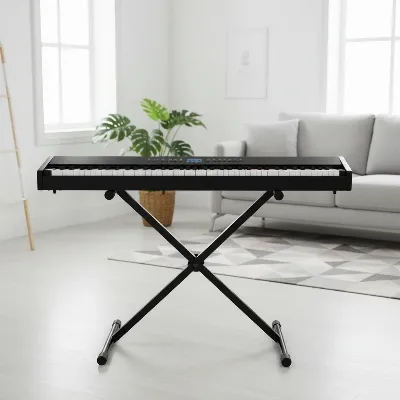 Casio Privia PX-S1100 digital piano showcasing its slim profile and lightweight design, positioned on a portable stand.
Home Digital Pianos: Blending into Your Space
For home use, the PX-S1100’s minimalist aesthetic and compact footprint are significant advantages. Its elegant, glossy top panel with illuminated touch-sensor controls integrates seamlessly into any decor, vanishing when powered off for a clean look. It offers an immersive piano experience suitable for daily practice, family enjoyment, or casual performances. The improved speaker system delivers a rich and clear sound, making it a joy to play and listen to in a home environment. Its dual headphone jacks also enable quiet practice sessions, a crucial feature for shared living spaces.
Stage Pianos: Performance-Ready Simplicity
While not explicitly a stage piano with a vast array of sounds, the PX-S1100’s core features make it a strong contender for gigging pianists who primarily need high-quality piano and electric piano sounds. Its robust build, 1/4″ line outputs for connecting to external amplification, and exceptional portability are practical benefits for live performances. The included Bluetooth MIDI and Audio adapter further expands its utility, allowing wireless connection to sound systems or other devices on stage. Its focused sound set, while limited compared to dedicated stage pianos, provides essential tones with excellent quality, making it a reliable workhorse for many performers.
Casio’s Privia PX-S1100: A Brand Comparison
Casio has long been a key player in the digital piano market, particularly with its Privia series, known for delivering quality and innovation at accessible price points. The PX-S1100 continues this tradition, often drawing comparisons with popular models from industry giants like Yamaha and Roland.
Casio’s Multi-dimensional Morphing AiR Sound Source in the PX-S1100 is highly regarded for its detailed acoustic simulations, including string and damper resonance, key-off response, and hammer noise. This emphasis on subtle acoustic nuances creates a vibrant and expressive grand piano tone that many find captivating. The Smart Scaled Hammer Action Keyboard is celebrated for its compact design, realistic graded weighting, and simulated ebony and ivory key textures, offering a comfortable and responsive playing experience. It is often described as lighter than some competitors, which can be advantageous for beginners or players seeking a less fatiguing action.
In comparison, Roland’s digital pianos, such as the FP-30X, are often lauded for their PHA-4 Standard keyboard action, which many experienced players consider to offer a heavier, more acoustic-like feel with triple-sensor detection and escapement simulation. Roland’s SuperNATURAL sound engine is also praised for its acoustic realism and nuanced expression, providing a direct competitor in sound quality. While the PX-S1100 offers Bluetooth audio streaming, a feature often lacking in Roland’s direct competitors, the choice between the two often comes down to personal preference for key action and sound characteristics.
Yamaha’s P-series, like the P-125, features the Graded Hammer Standard (GHS) action, a well-established and reliable system that provides a solid, if sometimes perceived as slightly less sophisticated, weighted feel. Yamaha’s pure CF sound engine delivers a clear and authentic grand piano sound. The PX-S1100 generally surpasses the P-125 in terms of advanced connectivity (Bluetooth audio/MIDI included), superior portability, and a more modern, sleek design. However, the P-125 remains a strong contender for those who prefer Yamaha’s specific piano sound and a more traditional design.
Ultimately, the Casio Privia PX-S1100 carves its own path by combining cutting-edge portability and design with a highly capable sound engine and a responsive, albeit lighter, hammer action. It presents an exceptional value proposition, especially for those who prioritize a compact form factor, extensive modern connectivity, and a rich, dynamic piano sound, positioning itself as a compelling choice within its price segment.
Key Features of the Casio Privia PX-S1100
The Casio Privia PX-S1100 is engineered with a suite of features designed to deliver an authentic piano experience while embracing the conveniences of modern digital technology.
Sound: Multi-dimensional Morphing AiR Engine
At the heart of the PX-S1100’s sonic prowess is Casio’s Multi-dimensional Morphing AiR Sound Source. This advanced engine precisely captures and reproduces the complex, rich tones of a German concert grand piano. It achieves this by focusing on intricate acoustic simulations, including:
- String Resonance: Mimicking the sympathetic vibrations of other strings when a note is played.
- Damper Resonance: Recreating the richness and depth when the damper pedal is pressed.
- Key-Off Simulation: Reproducing the subtle sound of the damper returning to the strings when a key is released.
- Hammer Response and Key Action Noise: Adding authenticity by simulating the mechanical sounds of hammers striking and keys being pressed.
With 192-note polyphony, the PX-S1100 ensures that even complex passages with sustained notes and layered sounds will ring out clearly without notes dropping out. Beyond the stunning grand piano, the instrument offers 18 high-quality tones, including expressive electric pianos, lush organs, versatile strings, a vibraphone, and a harpsichord. The redesigned 8W + 8W stereo speaker system provides a surprisingly full and clear sound for its compact size, projecting towards both the player and the audience. Digital effects like Hall Simulator (4 types), Surround (2 types), Chorus (4 types), and Brilliance further enhance the sonic depth and presence, allowing players to tailor the sound to their preferences or performance environment.
Keyboard: Smart Scaled Hammer Action
The PX-S1100 features Casio’s Smart Scaled Hammer Action Keyboard, an 88-key, fully weighted action designed to replicate the touch of an acoustic grand piano. Key characteristics include:
- Graded Weighting: Keys in the lower registers feel heavier, progressively becoming lighter towards the treble end, mirroring an acoustic piano.
- Simulated Ebony and Ivory Key Textures: These tactile surfaces absorb moisture, providing a confident grip and preventing slippage during extended playing sessions.
- 5 Levels of Touch Sensitivity (plus off): This allows players to customize the keyboard’s response to their playing style, from a very light touch to a heavy, expressive attack.
The “Smart” aspect refers to a dual-sensor system enhanced by software, providing responsive and accurate key detection. While some experienced players might find the action lighter than traditional acoustic pianos or some competitors, many appreciate its comfortable and accessible feel, particularly for beginners and intermediate players.
Advanced Features for Learning and Creativity
The PX-S1100 is equipped with modern features that support both learning and creative expression:
- Bluetooth MIDI & Audio: The included WU-BT10 adapter enables wireless connectivity, allowing you to stream audio from your smart device through the piano’s speakers or use Bluetooth MIDI with compatible apps and software.
- USB Connectivity: USB Type B allows connection to computers for MIDI data, while USB Type A can be used for recording audio directly to a flash drive or playing back audio files.
- Chordana Play for Piano App: Casio’s free iOS/Android app expands the piano’s functionality, offering an intuitive interface for changing settings, accessing the music library, learning songs, and more.
- Metronome: An adjustable metronome (20-255 bpm) is built-in, essential for rhythm and timing practice.
- MIDI Recorder: A 2-track MIDI recorder allows you to capture your performances (up to 1 song, approximately 10,000 notes total), perfect for reviewing progress or composing.
- Audio Recorder: Directly record your performance as an audio file (up to 25 minutes per song) to a USB flash drive.
- Layer and Split Functions: Layer allows you to combine two sounds (e.g., piano and strings), while Split assigns different sounds to the left and right halves of the keyboard (e.g., bass in the left hand, piano in the right).
- Duet Mode: Divides the keyboard into two equal pitch ranges, ideal for teacher-student lessons or playing duets side-by-side.
- Transpose and Octave Shift: Easily change the key of the piano or shift the keyboard’s pitch in octaves.
Design and Durability
The PX-S1100’s design is a significant selling point:
- Slim & Lightweight: At just 9.1 inches (23.2 cm) deep and 24.7 pounds (11.2 kg), it’s one of the most compact and lightest 88-key weighted digital pianos available.
- Elegant Finish: The glossy top panel with illuminated touch sensor controls provides a sophisticated, seamless look that blends into any environment. The controls light up when active and fade away when powered off.
- Battery Operation: The ability to run on 6 AA batteries offers unprecedented freedom for mobile musicians.
- Build Quality: While lightweight, the PX-S1100 is constructed to be robust for its class, with keys that feel sturdy and responsive. The simulated ebony and ivory textures on the keys also contribute to their overall feel and durability.
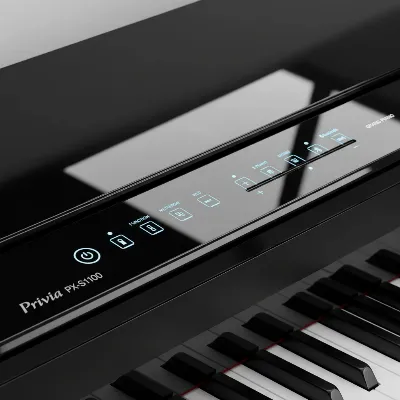 Close-up of Casio Privia PX-S1100's sleek control panel with illuminated touch sensors.
Buying a Digital Piano Based on Budget: Where the PX-S1100 Fits
When investing in a digital piano, your budget plays a significant role in determining the features and quality you can expect. The Casio Privia PX-S1100 comfortably sits in the mid-range segment, offering a compelling balance of performance and affordability that makes it suitable for a broad spectrum of users.
Entry-Level Options (Under $500 – $700)
For absolute beginners or those with a very tight budget, options in this segment often provide basic weighted keys and fundamental piano sounds. These models prioritize cost-effectiveness over advanced features or intricate acoustic simulations. While suitable for initial exploration, players might quickly outgrow their capabilities in terms of sound realism, key feel, and connectivity. The PX-S1100, while slightly above this range, offers a significantly enhanced experience that justifies the step up, preventing the need for an early upgrade.
Mid-Range Excellence (Around $700 – $1,200)
This is where the Casio Privia PX-S1100 truly shines. At its price point, it delivers exceptional value by combining a highly realistic key action, a sophisticated sound engine, and comprehensive modern connectivity. It’s an ideal choice for:
- Beginners committed to learning: The authentic touch and inspiring sound will foster good technique and maintain motivation.
- Intermediate players: Its expressive capabilities, advanced simulations, and recording features allow for continued skill development and creative exploration.
- Gigging musicians needing portability: The slim design, lightweight build, and battery operation are invaluable for musicians on the move.
- Home users seeking quality without bulk: It provides a premium piano experience without dominating living space or requiring constant maintenance.
The PX-S1100 offers a feature set that often rivals digital pianos in higher price brackets, particularly concerning its portability and Bluetooth integration. While you might find models with a heavier key action or a wider array of sounds in this segment, few combine the PX-S1100’s unique blend of slimness, battery power, and quality sound/action.
Premium & Professional Choices (Above $1,200)
In higher price tiers, digital pianos offer more advanced features such as triple-sensor key actions with escapement, more powerful speaker systems, larger sound libraries, extensive customization options, and often more robust cabinet designs resembling traditional pianos. While these instruments provide an even greater level of realism and versatility, they typically come with increased size, weight, and a significantly higher cost. For many players, the Casio PX-S1100 offers 80-90% of the premium experience at a fraction of the cost and with unmatched portability, making it a pragmatic choice unless those high-end nuances are absolutely critical.
Where to Purchase Your Casio Privia PX-S1100
Finding a reputable seller for your Casio Privia PX-S1100 ensures you receive a genuine product, proper warranty, and reliable after-sales support.
Authorized Music Stores in Your Region
Visiting a physical music instrument store allows you to test the PX-S1100 firsthand. You can feel the Smart Scaled Hammer Action keyboard, listen to its AiR sound engine through the internal speakers and headphones, and compare it directly with other models like those from Yamaha or Roland. Knowledgeable staff can answer questions and offer personalized advice. This hands-on experience is invaluable for assessing whether the piano’s touch and tone resonate with your personal preferences.
Reputable Online Retailers
Many established online music retailers offer competitive pricing, free shipping, and generous return policies. Websites like Sweetwater, Kraft Music, Thomann, and other major music instrument e-commerce platforms are excellent choices. They often provide detailed product descriptions, customer reviews, and video demonstrations. When purchasing online, always confirm the seller is an authorized Casio dealer to ensure warranty validity and product authenticity. Look for bundles that may include essential accessories like a stand, bench, or headphones, as these can offer significant savings.
Considerations When Buying a Used Digital Piano
While the PX-S1100 is a relatively new model, you might encounter used options. If considering a used instrument, exercise caution:
- Inspect Thoroughly: Check all keys for proper function and uniform weighting. Test all buttons, pedals, inputs/outputs, and speaker functionality.
- Verify Condition: Look for signs of wear and tear, especially on the keys, casing, and connectivity ports.
- Check Bluetooth Adapter: Ensure the WU-BT10 Bluetooth adapter is included and functional, as it is a key feature.
- Ask for History: Inquire about the piano’s age, how it was used, and if any repairs have been made.
- Test All Features: Connect headphones, try the metronome, record a short piece, and test Bluetooth if possible.
- Warranty: Most manufacturer warranties are non-transferable, so a used piano typically won’t come with one. Factor this into your decision.
For a balance of price, warranty, and peace of mind, buying new from an authorized dealer is generally recommended for the Casio Privia PX-S1100.
Maintaining and Caring for Your Digital Piano
Proper care and maintenance will significantly extend the lifespan and preserve the performance of your Casio Privia PX-S1100. Digital pianos are generally low-maintenance compared to acoustic instruments, but a few simple practices can keep them in excellent condition.
General Placement and Protection
- Stable Surface: Always place your PX-S1100 on a sturdy, flat surface or a purpose-built keyboard stand. This prevents wobbling and potential damage.
- Avoid Extremes: Keep the piano away from direct sunlight, heat sources (radiators, vents), and areas with extreme temperature fluctuations or high humidity. Excessive heat can warp components, and humidity can affect electronic circuits.
- Dust Cover: When not in use, cover your piano with a dust cover. Dust and debris can accumulate between the keys and within internal components, potentially causing issues over time.
- Cable Management: Keep cables organized and untangled to prevent tripping hazards and reduce stress on connection ports.
Cleaning the Keyboard and Surface
- Key Cleaning: The simulated ebony and ivory keys can be gently wiped with a soft, slightly damp cloth (dampened with plain water) to remove fingerprints and smudges. Avoid harsh chemicals, abrasive cleaners, or excessive moisture, as these can damage the key surfaces or electronics. For stubborn grime, a very mild soap solution can be used sparingly, ensuring the cloth is nearly dry. Always wipe dry with a clean, soft cloth immediately afterward.
- Surface Cleaning: The glossy top panel and other surfaces should be cleaned with a soft, lint-free cloth. A microfiber cloth is excellent for removing fingerprints and dust without scratching the finish. Again, avoid harsh chemicals. For the touch-sensitive controls, simply wipe gently.
Connectivity and Software Updates
- Gentle Connections: When plugging in headphones, USB cables, or pedals, do so gently. Forcing connections can damage the ports.
- Firmware Updates: Periodically check the Casio website for any available firmware updates for your PX-S1100. These updates can improve performance, add new features, or fix bugs. Follow Casio’s instructions carefully when performing updates.
- Battery Care: If using battery power, remove the batteries if the piano will be stored for an extended period to prevent leakage.
By following these simple maintenance tips, your Casio Privia PX-S1100 will remain a reliable and enjoyable instrument for years to come.
Conclusion
The Casio Privia PX-S1100 stands out as a triumph of modern digital piano design, offering an exceptional blend of authentic playability, sophisticated sound, and unparalleled portability. Its Multi-dimensional Morphing AiR Sound Source delivers a richly expressive grand piano tone, complemented by the responsive Smart Scaled Hammer Action keyboard that provides a nuanced playing experience. With a strikingly slim profile, remarkably light weight, and the added convenience of battery operation and integrated Bluetooth MIDI and Audio, the PX-S1100 is perfectly suited for dynamic lifestyles, compact living spaces, and aspiring musicians on the go.
Whether you are a beginner seeking an inspiring and accessible instrument to kickstart your musical journey, an intermediate player demanding expressive capabilities for practice and performance, or a gigging musician needing a reliable and easily transportable piano, the PX-S1100 offers tremendous value. While its key action may be lighter than some acoustic counterparts, it is comfortable and responsive, making it an excellent choice for a wide audience. The Casio Privia PX-S1100 is more than just a digital piano; it’s a testament to innovation, designed to fit seamlessly into your life and unlock your musical potential.
What musical adventures will you embark on with your Casio Privia PX-S1100?
Frequently Asked Questions
What are the main improvements of the PX-S1100 over the PX-S1000?
The Casio PX-S1100 builds upon its predecessor with key enhancements including an improved grand piano sound with enhanced resonance, a redesigned speaker system for clearer audio, and the inclusion of the WU-BT10 Bluetooth MIDI & Audio adapter for wireless connectivity straight out of the box.
Is the Casio PX-S1100 suitable for beginners?
Yes, the PX-S1100 is an excellent choice for beginners. Its Smart Scaled Hammer Action keyboard provides a realistic touch that fosters proper technique, while the inspiring sound quality and features like the Chordana Play app, metronome, and lesson functions offer comprehensive support for learning.
Can I connect the PX-S1100 to external speakers or headphones?
Absolutely. The PX-S1100 features dual 1/4″ line outputs for connecting to external amplification systems or recording interfaces. It also has two 1/8″ headphone jacks, allowing for private practice or duets without disturbing others.
How realistic is the keyboard feel of the PX-S1100?
The PX-S1100 features Casio’s Smart Scaled Hammer Action Keyboard with graded weighting and simulated ebony/ivory key textures, providing a highly realistic and responsive feel akin to an acoustic piano. While some advanced players might find it slightly lighter than certain competitors, it offers excellent dynamic control and a comfortable playing experience.
Does the PX-S1100 have built-in recording capabilities?
Yes, the PX-S1100 includes both a 2-track MIDI recorder for capturing performances as MIDI data and an audio recorder that allows you to record your playing directly to a USB flash drive as an audio file (up to 25 minutes per song).
Maintain and Care for Your Casio Privia PX-S1100
Proper care and maintenance will significantly extend the lifespan and preserve the performance of your Casio Privia PX-S1100 digital piano.
Always place your PX-S1100 on a sturdy, flat surface or a purpose-built keyboard stand to prevent wobbling and potential damage. Keep the piano away from direct sunlight, heat sources, and areas with extreme temperature fluctuations or high humidity to protect its components.
Gently wipe the simulated ebony and ivory keys with a soft, slightly damp cloth (dampened with plain water) to remove fingerprints and smudges. For the glossy top panel and other surfaces, use a soft, lint-free microfiber cloth to remove dust and fingerprints without scratching the finish. Avoid harsh chemicals or excessive moisture on all surfaces.
Keep all cables organized and untangled to prevent tripping hazards and reduce stress on connection ports. Periodically check the Casio website for any available firmware updates for your PX-S1100, as these can improve performance or fix bugs. If using battery power, remove batteries during extended storage to prevent leakage.
Get our weekly buyer guide
Practical specs, not advice. Unsubscribe anytime.

As a beginner, I was overwhelmed by all the options, but the Casio Privia PX-S1100 was recommended to me, and I’m so glad I got it. The 192-note polyphony means I don’t have to worry about notes cutting out, even when I’m experimenting with more complex pieces. It’s made learning so much more enjoyable, and the connectivity options are a huge plus for using learning apps.
I bought this mainly for silent practice, and it excels at that. The feel of the keys is decent, and the sound through headphones is excellent. However, I found the included WU-BT10 Bluetooth adapter a bit finicky to set up initially with my older tablet. Once it was connected, it worked fine, but the process wasn’t as seamless as I hoped. Otherwise, it’s a good instrument for home use.
This piano is a solid choice for the price. The Multi-dimensional Morphing AiR Sound Source really does make a difference in how authentic the grand piano sound feels. My only minor complaint is that while the Bluetooth adapter is super handy for audio, I wish the built-in speakers were a bit more powerful for when I’m just jamming at home without headphones. Still, great value overall.
I’ve been looking for a portable digital piano for a while, and the Casio Privia PX-S1100 is perfect. The fact that it only weighs 24.7 pounds is a game-changer for me since I move it between my apartment and my band’s practice space. The sound quality is surprisingly rich for such a compact instrument, and the Smart Scaled Hammer Action keyboard feels really good under my fingers.