Yes, you can absolutely learn piano on a budget-friendly digital piano in 2026, provided you choose a model with essential features like 88 fully weighted, touch-sensitive keys. While extremely inexpensive keyboards might present limitations, today’s budget-friendly digital pianos, typically priced between $400 and $1000, offer remarkable features that make them an excellent starting point for aspiring pianists, providing a practical pathway to musical mastery without breaking the bank.
Navigating the Digital Piano Market: A Beginner’s Guide
Understanding Digital Pianos: Modern Learning Tools
What exactly is a digital piano, and why has it become so popular among learners? Unlike their acoustic counterparts, digital pianos electronically produce sounds, offering a versatile and often more accessible entry into the world of piano playing. Their popularity stems from several key benefits: they are generally more affordable, easier to move, and allow for silent practice via headphones, making them ideal for homes with limited space or noise concerns. Digital pianos require minimal maintenance, eliminating the need for costly tunings and repairs associated with acoustic instruments.
The evolution of digital pianos has been marked by continuous technological advancements aimed at replicating the acoustic piano experience. Early models were simplistic, but modern digital pianos leverage sophisticated sampling technologies to capture the rich, nuanced sounds of grand pianos and advanced key actions to mimic their authentic touch. This blend of tradition and technology makes digital pianos incredibly versatile, often including multiple instrument sounds, recording capabilities, and connectivity options that unlock new creative and learning possibilities. For explore our digital pianos reviews on this site.
Comparing digital pianos with traditional acoustic pianos reveals a clear set of pros and cons, especially for beginners. Acoustic pianos offer an unparalleled resonance and organic feel, providing a deeply immersive playing experience. However, they come with significant drawbacks: high purchase costs, ongoing maintenance (tuning, climate control), considerable weight and size, and fixed volume that can be problematic in shared living spaces. Digital pianos, conversely, excel in affordability, portability, and convenience. They offer adjustable volume, headphone jacks for private practice, and a range of built-in features like metronomes and recording functions that are invaluable for learning. While even high-end digital pianos may not perfectly replicate the complex harmonic interactions of an acoustic grand, for most beginners, a well-chosen digital piano provides a fully capable platform for developing fundamental technique and musicality.
Popular Types of Digital Pianos for Every Learner
The digital piano market offers various configurations, each suited to different needs and environments. Understanding these types helps in choosing the perfect instrument for your learning journey.
Home Digital Pianos (Console Digital Pianos): These are designed to look and feel like traditional upright pianos, often featuring an integrated stand with pedals and a lid that covers the keys.
- Characteristics: Furniture-style cabinet, often with a more robust speaker system, 88 fully weighted keys.
- Pros: Aesthetic appeal, stable playing experience, excellent sound projection, often includes triple pedals for full expression.
- Cons: Less portable, generally higher price point than slab-style portables.
- Suitable for: Beginners and intermediate players who have dedicated space at home and seek a classic piano aesthetic and feel. Examples include the Casio PX-870 and Kawai KDP120.
Stage Pianos: Built for professional musicians who need high-quality sound and touch for live performances or studio work.
- Characteristics: Durable, portable design, professional-grade key action and sound engines, extensive connectivity options, often lacks built-in speakers.
- Pros: Exceptional sound quality, advanced features for sound shaping, road-ready build.
- Cons: Can be expensive, often requires external amplification, may have a steeper learning curve for non-performers.
- Suitable for: Advanced students or professionals who need an instrument for gigging, recording, or who already own external speakers.
Portable Digital Pianos (Slab Digital Pianos): These are compact and lightweight, designed for easy transport and setup in various locations.
- Characteristics: No integrated stand, typically 88 fully weighted keys (though some cheaper models may have fewer or semi-weighted), often come with basic sustain pedal.
- Pros: Highly portable, space-saving, often the most budget-friendly option for weighted keys.
- Cons: Requires a separate stand, bench, and sometimes a better sustain pedal; built-in speakers might be less powerful than console models.
- Suitable for: Most beginners, students with limited space, or those who need to transport their instrument for lessons or informal performances. Top models include the Roland FP-10, Yamaha P-145, and Casio PX-S1100.
Hybrid Digital Pianos: These instruments bridge the gap between acoustic and digital, incorporating actual wooden keys and hammer mechanisms from acoustic pianos into a digital framework.
- Characteristics: Often feature real acoustic piano actions, advanced sound modeling, high-quality speaker systems.
- Pros: Exceptionally realistic touch and response, combines the best of both worlds.
- Cons: Very expensive, less portable.
- Suitable for: Serious students or professionals who desire the authentic feel of an acoustic piano with the versatility and convenience of a digital instrument. These are typically not considered “cheap” options.
Leading Digital Piano Brands for Beginners
|
Our Picks for the Best Digital Piano in 2026
As an Amazon Associate I earn from qualifying purchases.
|
||
| Num | Product | Action |
|---|---|---|
| 1 | RockJam RJ761 61 Key Keyboard Piano with Keyboard Bench, Digital Piano Stool, Sustain Pedal, Headphones & Lessons |

|
| 2 | STRICH 88 Key Digital Piano Foldable Full Size Electric Keyboard with Semi-Weighted Sensitive Keys, Portable Electric Piano Set for Beginner, Bundle with Sustain Pedal, Headphones, Music Rest, SEP-88F |
|
| 3 | Yamaha 88-Key Digital Piano with Weighted Keys, Compact Design, Bluetooth, Keyboard, Music Rest, Sustain Foot Switch, and Built-in Speakers for Home Practice or Travel P145BT |
|
| 4 | Yamaha P225 88-Key Digital Piano with Weighted Keys, Portable Design, Keyboard, Music Rest, Sustain Foot Switch, and Built-In Speakers, Black (P225B) |
|
| 5 | Roland FP-10 | Compact 88-Note Digital Piano | SuperNATURAL Piano Tones | Authentic Acoustic Feel Keyboard | Great for Beginners & Experienced Players | Bluetooth & MIDI Connectivity |
|
| 6 | Yamaha 88-Key Weighted Portable Digital Piano Keyboard with Music Rest, Sustain Foot Switch, Built-in Speakers, USB Connectivity, Black (P45B) |
|
| 7 | Rhymo Folding Piano Keyboard, 61 Keys Sensitive Electric Piano, Weighted Portable Electric Keyboards with Bluetooth MIDI, Digital Foldable Keyboard for Beginner (Black) |
|
| 8 | 61 keys keyboard piano, Electronic Digital Piano with Built-In Speaker Microphone, Sheet Stand and Power Supply, Portable piano Keyboard Gift Teaching for Beginners |
|
| 9 | Portable Piano Keyboard, Semi-Weighted Folding Digital Piano 88 Key, Full Size, Wood Grain, Electric Piano Keyboard w/MIDI Bluetooth, Suitable for Adult, Toddler |
|
| 10 | Alesis Melody 61 MK4 Keyboard Piano for Beginners with 61 Keys, Speakers, Stand, Bench, Headphones, Tablet/Sheet Music Stand, 300 Sounds and Music Lessons |
|
When exploring budget-friendly digital pianos, several reputable brands consistently stand out for their quality and value. These manufacturers have decades of experience crafting instruments suitable for learners:
- Yamaha: Renowned for their realistic piano sounds and reliable Graded Hammer Standard (GHS) or Graded Hammer Compact (GHC) key actions, Yamaha offers excellent beginner models like the P-145. Their sound sampling technology often delivers rich, authentic tones.
- Roland: Known for their superb key actions, often including “escapement” simulation even in budget models, which adds to the realism of an acoustic piano touch. The Roland FP-10 and FP-30X are highly recommended for their realistic feel and sound.
- Casio: Particularly with their Privia series, Casio has made significant strides in offering slim, portable digital pianos with impressive key actions (Smart Scaled Hammer Action) and authentic piano sounds. Models like the PX-S1100 and PX-S3100 provide excellent value.
- Kawai: Esteemed for their natural key actions and rich, expressive piano sounds. Kawai offers entry-level digital pianos like the ES120 and KDP120 that provide a premium playing experience for their price point.
- Korg: Korg offers strong contenders in the budget segment, such as the Liano and B2, which are praised for their powerful sound and good value, making them solid choices for beginners.
These brands consistently deliver instruments that focus on the core elements crucial for learning: realistic key action, quality sound, and reliable performance. It’s generally advisable to stick with these established manufacturers rather than lesser-known “off-brands” that may compromise on playability and sound authenticity.
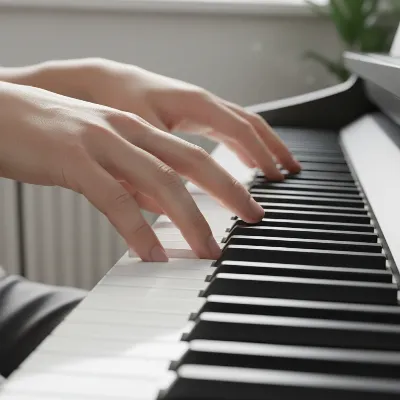 A close-up of a digital piano keyboard with fingers illustrating weighted keys and touch sensitivity.
Essential Features to Prioritize When Buying a Digital Piano
Choosing the right digital piano, especially on a budget, means focusing on features that genuinely impact your learning and enjoyment.
Sound Quality:
- Sampling Technology: Most digital pianos use sampled sounds, meaning recordings of real acoustic pianos. Higher quality samples result in more authentic and dynamic sounds. Look for models with multi-layered samples that capture the nuances of different playing dynamics.
- Number of Tones (Voices): While many cheap keyboards boast hundreds of tones, for serious piano learning, the quality of the main piano voice is paramount. A few high-quality piano, electric piano, and string sounds are more valuable than many mediocre ones.
- Polyphony: This refers to the number of notes a digital piano can produce simultaneously. For beginners, a polyphony of at least 64 notes is acceptable, but 96-192 notes are preferred to ensure complex pieces or layered sounds don’t suffer from “note drop-off”.
Keyboard Action: This is arguably the most critical feature for a beginner.
- Key Type:
- Weighted Keys (Hammer Action): Absolutely essential for developing proper finger strength, technique, and muscle memory that translates to an acoustic piano. These keys use actual hammers or weights to mimic the mechanical action of an acoustic piano.
- Graded Hammer Action: An enhancement where lower keys are heavier, and higher keys are lighter, just like an acoustic grand piano. This realism is highly beneficial for technique development.
- Semi-weighted Keys: Offer some resistance but lack the full realism of weighted keys. Better than unweighted, but not ideal for serious piano study.
- Synth-action (Unweighted) Keys: Light and springy, they do not simulate an acoustic piano’s feel and are generally unsuitable for learning proper piano technique, potentially leading to bad habits.
- Key Sensitivity (Velocity Sensitivity): This feature means the piano responds to how hard or soft you press a key, allowing for dynamic expression (playing louder or softer notes). It’s fundamental for musicality and should be considered non-negotiable.
- Key Material: While high-end pianos might feature wooden keys, most budget digital pianos use plastic. The quality of the key mechanism and feel is more important than the material itself.
Connectivity and Features:
- Pedals: A sustain pedal is vital for expression. Look for models that support a continuous (half-pedal) sustain rather than just an on/off switch. Some digital pianos come with a three-pedal unit for even greater authenticity.
- Connectivity (Bluetooth, USB): USB MIDI allows connection to computers for recording or using software instruments. Bluetooth MIDI/Audio can connect to learning apps like Simply Piano or Flowkey, offering interactive lessons and expanding your learning resources.
- Learning Tools: Many digital pianos include built-in metronomes (essential for rhythm), recording functions for self-assessment, and sometimes lesson modes or dual/split keyboard functions for teacher-student duets.
- Built-in Speakers and Headphone Jack: Quality speakers ensure you can hear your playing clearly, and a headphone jack is crucial for private practice without disturbing others.
Design and Durability:
- Build Quality: While budget-friendly, reputable brands generally offer robust construction. Check reviews for common complaints about key durability or component longevity.
- Aesthetics: For home digital pianos, the cabinet design and finish might be a factor. For portable models, compactness and a sturdy build for transport are key.
Investing Wisely: Buying a Digital Piano by Budget
The term “cheap digital piano” can be misleading. It’s more accurate to think in terms of “budget-friendly digital pianos” that still offer the essential features for effective learning. Here’s a general guide to what you can expect across different price points in 2026:
Budget-Friendly (Under $500): This is where you’ll find excellent entry-level portable digital pianos that prioritize piano performance.
- What to Expect: 88 fully weighted keys (often Graded Hammer Compact or similar), decent piano sound, good polyphony (64+ notes), headphone jack, sustain pedal input (sometimes with a basic pedal included). Connectivity like USB MIDI is common.
- Suitable for: Absolute beginners who are serious about learning proper technique but have a tight budget. These models focus on the core piano experience rather than extensive extra features.
- Examples: Roland FP-10, Yamaha P-145, Korg Liano, Casio CDP-S160. These provide a solid foundation for technique and musical development.
Mid-Range ($500-$1000): This price segment offers enhanced realism, more features, and often better build quality.
- What to Expect: Improved key actions (more nuanced touch response), higher quality sound samples, increased polyphony (128+ notes), more instrument voices, better speaker systems, and expanded connectivity (Bluetooth Audio/MIDI). You might find console-style options here, or more advanced portable models.
- Suitable for: Beginners who are committed to long-term learning, or intermediate players. These pianos offer more expressive capabilities and a richer playing experience.
- Examples: Roland FP-30X, Casio PX-S3100, Kawai ES120, Yamaha P-225.
Premium (Above $1000): While the keyword is “cheap,” it’s what premium digital pianos offer for context.
- What to Expect: Highly sophisticated key actions (often simulating escapement and key-off effects), advanced sound engines (physical modeling alongside sampling), larger sound libraries, powerful multi-speaker systems, extensive recording features, and premium cabinet finishes.
- Suitable for: Experienced players, performers, and those who desire the most authentic digital piano experience short of an acoustic.
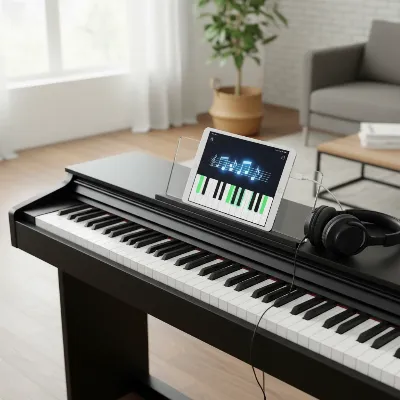 A digital piano connected to a tablet showing a piano learning app, illustrating modern learning features.
Where to Buy Your Digital Piano Reliably
Purchasing a digital piano is an investment in your musical journey, so it’s important to buy from reputable sources.
- Authorized Music Stores: Visiting a physical music store allows you to try out different models, feel the key actions, and compare sounds firsthand. Knowledgeable staff can offer personalized advice. These stores often provide warranty support and servicing.
- Reputable Online Retailers: Major online music instrument retailers are reliable sources. They often have competitive pricing and customer reviews. Always check the retailer’s return policy and warranty information before purchasing. Look for stores that specialize in musical instruments, not just general marketplaces.
- Buying Used Digital Pianos: This can be a cost-effective option, but proceed with caution.
- Inspect Thoroughly: Check all keys for proper function and feel, test all buttons and pedals, and listen for any abnormal sounds from speakers or connections.
- Age and Condition: Newer models benefit from technological advancements. Be wary of very old units unless they are from a highly reputable series and well-maintained.
- Brand Reputation: Stick to well-known brands (Yamaha, Roland, Casio, Kawai, Korg) even when buying used, as their quality and durability are generally higher.
- No Warranty: Most used sales come without a warranty, so factor in potential repair costs.
Essential Maintenance Tips for Your Digital Piano
One of the great advantages of digital pianos is their low maintenance. However, a few simple practices can significantly extend your instrument’s life and keep it performing optimally.
- Regular Cleaning: Dust can accumulate between keys and on surfaces. Use a soft, dry microfiber cloth to gently wipe down the keys and cabinet regularly. For stubborn grime on keys, a slightly damp cloth with mild soap can be used, but ensure no moisture seeps into the instrument.
- Protect from Elements: Keep your digital piano away from direct sunlight, extreme temperatures, and high humidity, which can damage internal components or affect the finish. If you have a portable model, consider a dust cover when not in use.
- Proper Placement: Place your piano on a sturdy, level stand or surface to prevent wobbling or accidental falls. Ensure adequate ventilation around the instrument, especially if it has vents.
- Cable Management: Periodically check all cables (power, pedal, USB, headphone) for wear and tear. Securely connect them to prevent intermittent issues or damage to ports. Avoid tripping hazards.
- Software Updates: For models with advanced connectivity, occasionally check the manufacturer’s website for firmware updates, which can improve performance or add new features.
Conclusion
The journey to learning piano in 2026 is more accessible than ever, thanks to the advancements in digital piano technology. While a truly “cheap” keyboard with unweighted keys and no touch sensitivity can indeed hinder your progress by fostering bad habits and limiting expression, a thoughtfully chosen, budget-friendly digital piano provides an excellent, capable, and inspiring platform for beginners. Prioritizing essential features like 88 fully weighted, touch-sensitive keys, realistic piano sound, and robust pedal support from reputable brands ensures you’re investing in a tool that will nurture your musical development rather than frustrate it. These instruments offer the perfect balance of authentic feel, versatile features, and affordability, allowing you to build foundational skills, explore your creativity, and enjoy the profound rewards of playing the piano. So, are you ready to embark on your musical adventure with a digital piano that’s perfectly suited to your aspirations?
Frequently Asked Questions
Will a very cheap keyboard hinder my progress?
Yes, very cheap keyboards (often under $300) with unweighted, non-touch-sensitive keys and fewer than 88 keys can significantly hinder your progress. They prevent the development of proper finger strength, dynamics, and technique, making it difficult to transition to more advanced playing or an acoustic piano later on.
Do I really need 88 weighted keys?
For serious piano learning, 88 fully weighted keys are highly recommended. This replicates the feel of an acoustic piano, building essential finger strength and muscle memory. While 61 or 76 keys can suffice for very early exploratory learning, an 88-key instrument will eventually be needed for a full range of repertoire.
What is polyphony, and how much do I need?
Polyphony is the number of notes a digital piano can sound simultaneously. For beginners, a minimum of 64 notes is generally acceptable, but 96 to 192 notes are better to prevent notes from cutting off, especially when playing complex chords or using layered sounds.
Are built-in learning tools useful?
Yes, many digital pianos come with useful built-in learning tools like metronomes, recording functions, and lesson modes. These features can make practice more engaging, provide structured learning paths, and help you track your progress.
What are the best budget-friendly digital piano brands?
For reliable and effective learning instruments, focus on established brands such as Yamaha, Roland, Casio, Kawai, and Korg. These manufacturers offer excellent budget-friendly digital pianos with quality key actions and sounds, typically in the $400-$1000 range.
Can a digital piano replace an acoustic piano for learning?
For most beginners, a well-chosen digital piano can effectively replace an acoustic piano for learning fundamental technique and musical development. They offer practicality, affordability, and features like silent practice, which are highly beneficial for new students.
How long should my first digital piano last?
With proper care and maintenance, a quality budget-friendly digital piano from a reputable brand can last many years, often through your beginner and intermediate stages of learning. The durability of key actions and internal components varies by brand and model, but good support from manufacturers is common.
Frequently Asked Questions
Will a very cheap keyboard hinder my piano learning progress?
Yes, very cheap keyboards, often priced under $300, with unweighted, non-touch-sensitive keys and fewer than 88 keys can significantly hinder your progress. They prevent the development of proper finger strength, dynamics, and technique, making it difficult to transition to more advanced playing or an acoustic piano later on.
Is it necessary to have 88 weighted keys for learning piano?
For serious piano learning, 88 fully weighted keys are highly recommended. This replicates the feel of an acoustic piano, building essential finger strength and muscle memory. While 61 or 76 keys can suffice for very early exploratory learning, an 88-key instrument will eventually be needed for a full range of repertoire.
What is polyphony in a digital piano and how much is needed?
Polyphony refers to the number of notes a digital piano can sound simultaneously. For beginners, a minimum of 64 notes is generally acceptable, but 96 to 192 notes are better to prevent notes from cutting off, especially when playing complex chords or using layered sounds.
Which digital piano brands are best for beginners on a budget?
For reliable and effective learning instruments, focus on established brands such as Yamaha, Roland, Casio, Kawai, and Korg. These manufacturers offer excellent budget-friendly digital pianos with quality key actions and sounds, typically in the $400-$1000 range.
Can a digital piano effectively replace an acoustic piano for new students?
For most beginners, a well-chosen digital piano can effectively replace an acoustic piano for learning fundamental technique and musical development. They offer practicality, affordability, and features like silent practice, which are highly beneficial for new students.
How long can I expect my first budget-friendly digital piano to last?
With proper care and maintenance, a quality budget-friendly digital piano from a reputable brand can last many years, often through your beginner and intermediate stages of learning. The durability of key actions and internal components varies by brand and model, but good support from manufacturers is common.
How to Choose a Budget-Friendly Digital Piano
Selecting the right digital piano on a budget involves prioritizing key features that enhance your learning experience without overspending.
Ensure the digital piano has 88 fully weighted, hammer-action keys. This is crucial for developing proper finger strength and technique that translates to an acoustic piano.
Look for models with high-quality sampled piano sounds and a polyphony of at least 64 notes, preferably 96-192. This ensures rich, dynamic sound and prevents notes from cutting off during complex pieces.
Confirm the piano includes a sustain pedal input (ideally supporting half-pedal functionality) and USB MIDI connectivity. Bluetooth MIDI/Audio is a bonus for connecting to learning apps.
Stick to well-known brands like Yamaha, Roland, Casio, Kawai, and Korg. These manufacturers consistently offer reliable, quality instruments suitable for beginners within budget-friendly price ranges.
Aim for a budget between $400 and $1000 for a quality beginner digital piano. This range offers models with the necessary features for effective learning without compromising on playability or sound authenticity.
Get our weekly buyer guide
Practical specs, not advice. Unsubscribe anytime.

I was so hesitant to start learning piano because I thought I needed a super expensive acoustic. This guide really helped me see that a budget-friendly digital piano is totally viable. I ended up getting one in the $600 range and the 88 fully weighted keys feel fantastic. It’s been a game-changer for my practice sessions!
This was exactly what I needed to make an informed decision. I’ve always wanted to learn piano but thought it was out of my budget. Knowing that models between $400 and $1000 offer great features for beginners gave me the confidence to buy. I’m loving my new digital piano and the journey of learning!
As a complete beginner, I appreciated the focus on essential features. I picked up a model around $450 and it’s been perfect for getting started. The touch-sensitive keys are a must-have, and I’m really enjoying the learning process. My only minor gripe is that the built-in speakers could be a bit louder, but headphones solve that easily.
I was looking for something really basic to just try out piano, and I went with one of the lower-priced options mentioned, just under $400. While it’s okay for now, I’m already feeling the limitations. The key action isn’t as responsive as I’d hoped, and I think I should have invested a little more for better quality. It’s fine for a super casual dabbler, but if you’re serious, aim higher.