Digital pianos have become indispensable for music production, offering a versatile bridge between traditional acoustic instruments and modern digital audio workstations (DAWs). The right digital piano in 2026 provides authentic sound, seamless integration into your DAW, expressive control over virtual instruments, and durability for countless creative sessions. These instruments are electronic, designed to emulate acoustic pianos while offering modern features like MIDI and USB connectivity, a vast array of sounds, and headphone jacks for silent practice, making them ideal for home studios and professional setups alike.
Introduction to Digital Pianos for Production
Digital pianos are electronic musical instruments designed to emulate the sound and feel of an acoustic piano, while offering a host of modern features. Their rise in popularity, particularly in music production, stems from their ability to provide realistic piano experiences without the maintenance, tuning, and space requirements of their acoustic counterparts. Historically, early digital pianos offered basic sounds and limited touch response, but advancements in sampling technology, physical modeling, and keyboard actions have propelled them into sophisticated tools indispensable for contemporary producers.
When comparing digital pianos to traditional acoustic pianos for production, the advantages are clear. Digital pianos offer instant connectivity via MIDI and USB, allowing them to control software instruments and record directly into a DAW. They provide a vast array of sounds beyond just piano, often including organs, strings, and synthesizers, expanding creative possibilities. Features like headphone jacks enable silent practice and recording, a critical benefit for home studios. While acoustic pianos offer an unparalleled organic resonance, digital pianos provide flexibility, control, and a rich palette of sounds essential for modern music production.
Types of Digital Pianos for Music Production
The diverse range of digital pianos available means there’s a model suited for almost any production environment. Understanding the distinctions between types will help you narrow down your search.
Stage Pianos
Stage pianos are built for portability and performance, making them excellent choices for producers who also gig or frequently move their setup. They typically feature robust builds, professional-grade key actions, and dedicated controls for live manipulation of sounds and effects. While they often lack built-in speakers to prioritize portability, their focus on high-quality sound engines and extensive connectivity (XLR outputs, MIDI I/O) makes them formidable studio tools. Brands like Nord are renowned for their professional stage instruments, emphasizing portability with exceptional weighted key action.
Portable Digital Pianos
More compact and lightweight than stage pianos, portable digital pianos are designed for ease of transport and use in smaller spaces. They usually come with built-in speakers, but often have line outputs for connecting to studio monitors or mixing consoles. Models like the Roland FP-30X or Kawai ES920 provide a satisfying playing experience with good key action and essential sounds, making them suitable for home studios where space is a premium. Their balance of playability and compact design appeals to producers needing flexibility.
Home Digital Pianos (Console)
|
Our Picks for the Best Digital Piano in 2026
As an Amazon Associate I earn from qualifying purchases.
|
||
| Num | Product | Action |
|---|---|---|
| 1 | 61 keys keyboard piano, Electronic Digital Piano with Built-In Speaker Microphone, Sheet Stand and Power Supply, Portable piano Keyboard Gift Teaching for Beginners |

|
| 2 | Alesis Melody 61 MK4 Keyboard Piano for Beginners with 61 Keys, Speakers, Stand, Bench, Headphones, Tablet/Sheet Music Stand, 300 Sounds and Music Lessons |
|
| 3 | Yamaha P225 88-Key Digital Piano with Weighted Keys, Portable Design, Keyboard, Music Rest, Sustain Foot Switch, and Built-In Speakers, Black (P225B) |
|
| 4 | STRICH 88 Key Digital Piano Foldable Full Size Electric Keyboard with Semi-Weighted Sensitive Keys, Portable Electric Piano Set for Beginner, Bundle with Sustain Pedal, Headphones, Music Rest, SEP-88F |
|
| 5 | Rhymo Folding Piano Keyboard, 61 Keys Sensitive Electric Piano, Weighted Portable Electric Keyboards with Bluetooth MIDI, Digital Foldable Keyboard for Beginner (Black) |
|
| 6 | RockJam RJ761 61 Key Keyboard Piano with Keyboard Bench, Digital Piano Stool, Sustain Pedal, Headphones & Lessons |
|
| 7 | Yamaha 88-Key Weighted Portable Digital Piano Keyboard with Music Rest, Sustain Foot Switch, Built-in Speakers, USB Connectivity, Black (P45B) |
|
| 8 | Yamaha 88-Key Digital Piano with Weighted Keys, Compact Design, Bluetooth, Keyboard, Music Rest, Sustain Foot Switch, and Built-in Speakers for Home Practice or Travel P145BT |
|
| 9 | Portable Piano Keyboard, Semi-Weighted Folding Digital Piano 88 Key, Full Size, Wood Grain, Electric Piano Keyboard w/MIDI Bluetooth, Suitable for Adult, Toddler |
|
| 10 | Roland FP-10 | Compact 88-Note Digital Piano | SuperNATURAL Piano Tones | Authentic Acoustic Feel Keyboard | Great for Beginners & Experienced Players | Bluetooth & MIDI Connectivity |
|
Designed to resemble traditional upright or grand pianos, home digital pianos are often furniture-style instruments. While less portable, they can be excellent for a dedicated studio space, offering superior speaker systems, elegant aesthetics, and robust pedal units. Models like the Casio PX-870 or Kawai KDP120 are designed for a stationary setup, providing an immersive playing experience ideal for detailed composition and practice. Some higher-end console models include advanced sound engines and connectivity that rivals professional stage pianos, offering a complete package for a home studio.
Hybrid Digital Pianos
Hybrid digital pianos blur the line between acoustic and digital, incorporating actual wooden keys or full acoustic piano actions without strings. These instruments offer the most authentic playing feel, crucial for pianists who demand a high level of expressiveness in their production work. Brands like Kawai with their Novus series or Yamaha with their AvantGrand line feature true acoustic piano actions, combined with advanced digital sound engines. They offer an unparalleled tactile response for recording nuanced performances, though they come at a premium price point.
Top Digital Piano Brands for Music Production
When it comes to selecting a digital piano for music production, several brands consistently stand out for their innovation, sound quality, and connectivity features.
Yamaha: A dominant force in the music industry, Yamaha digital pianos are known for their bright, clear acoustic piano samples, often derived from their own concert grand pianos. They offer a broad range of models, from affordable portable units to high-end hybrids. For production, Yamaha models often feature reliable USB-MIDI connectivity and a good selection of onboard sounds, making them versatile workhorses. Their sound is generally considered vibrant and articulate.
Roland: Roland is celebrated for its SuperNATURAL sound engine, which uses physical modeling rather than just sampling to create incredibly expressive and dynamic piano tones. Roland pianos often have a slightly softer, more mellow sound compared to Yamaha, and excel in nuanced tonal characteristics and smooth decay. Their Progressive Hammer Action (PHA) keybeds are highly regarded for realism and durability. Many Roland instruments feature advanced MIDI capabilities, including Bluetooth MIDI, and are favored by stage performers and studio producers for their robust connectivity and expressive control.
Kawai: Kawai digital pianos are particularly praised for their realistic wooden-key actions, offering an authentic tactile response that appeals to classical pianists and those who prioritize touch. Their Harmonic Imaging technology ensures dynamic response. For studio use, Kawai’s higher-end models provide excellent sound fidelity and solid MIDI implementation, allowing for expressive control over virtual instruments. Kawai emphasizes the core piano experience with a natural tonal shading.
Casio: Casio has made significant strides in the digital piano market, especially with its Privia line, offering excellent price-to-performance value. Their Smart Hybrid Hammer Action combines wooden keys with smart sensor systems, delivering nuanced key tracking. Casio models often include comprehensive features like Bluetooth MIDI and audio streaming, and a good selection of onboard sounds, making them strong contenders for budget-conscious producers or those with limited space.
Nord: Nord pianos are synonymous with professional stage performance and studio excellence. Known for their distinctive red chassis, they prioritize high-quality sample libraries, robust hardware, and intuitive controls for real-time sound manipulation. While often more expensive, Nord instruments feature exceptional weighted key actions and comprehensive MIDI implementation, including extensive control over MIDI CC messages and program changes, making them ideal for professional producers and gigging musicians who require versatile sound design and reliable performance.
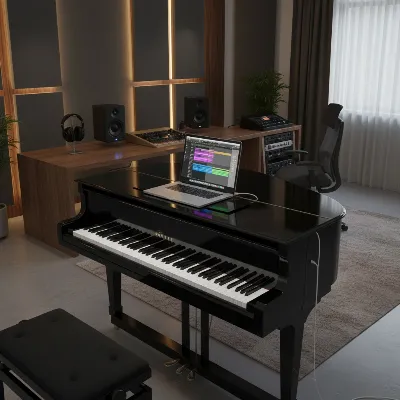 A digital piano with a sleek design, connected to a laptop running a DAW, with studio monitors in the background, showing modern music production setup.
Key Features for Music Production
When choosing a digital piano for music production, specific technical features become paramount, influencing sound quality, playability, and integration into your studio workflow.
Sound (Tone Engine)
The heart of any digital piano lies in its sound engine.
- Sampling Technology: Most digital pianos use sophisticated sampling, recording individual notes of acoustic grand pianos at multiple velocity levels. The quality and size of these samples directly impact realism. Look for multi-layered samples for natural dynamics.
- Physical Modeling: Some brands, notably Roland, use physical modeling, which recreates the complex sympathetic resonances and overtone structures of an acoustic piano algorithmically. This can result in incredibly nuanced and expressive sounds that respond organically to playing.
- Number of Tones (Sounds): While a great piano sound is crucial, a diverse range of high-quality additional sounds (electric pianos, organs, strings, pads, synths) can significantly enhance your production palette, reducing the need for external virtual instruments.
- Polyphony: This refers to the maximum number of notes a digital piano can sound simultaneously. For music production, especially when layering sounds, using a sustain pedal, or recording complex arrangements, a high polyphony count (128, 256, or even unlimited) is vital to prevent notes from cutting off prematurely.
Key Action
The feel of the keyboard is fundamental for expressive playing and accurate MIDI recording.
- Weighted/Hammer Action: These keybeds simulate the mechanical hammers of an acoustic piano, providing resistance and a heavier feel in the lower register and lighter touch in the higher notes. This is crucial for developing proper technique and for accurately capturing dynamic performances.
- Semi-weighted/Synth-action: Lighter and springier, these actions are less about piano realism and more about rapid playability, often preferred for organ or synthesizer parts. For primary piano recording, fully weighted is usually preferred.
- Key Sensitivity (Touch Response): This determines how well the piano responds to different playing velocities. Most digital pianos offer adjustable touch sensitivity, allowing you to fine-tune the keyboard’s response to your playing style or the requirements of a specific virtual instrument.
- Material: Some premium digital pianos incorporate wooden keys or hybrid wood-plastic constructions for enhanced durability and a more authentic feel. Triple sensor systems improve the accuracy of rapid note repetitions.
Connectivity and Features for Production
Modern digital pianos offer a wealth of connectivity options and features critical for studio integration.
- MIDI Connectivity (USB, 5-pin, Bluetooth): MIDI (Musical Instrument Digital Interface) is the backbone of digital music production.
- USB-MIDI: The most common connection, allowing your digital piano to send MIDI data directly to your computer (DAW). Many pianos are class-compliant, requiring no special drivers.
- 5-pin MIDI DIN: Traditional MIDI ports for connecting to older hardware synths, sound modules, or audio interfaces with MIDI I/O.
- Bluetooth MIDI: Offers wireless connectivity to computers or mobile devices, reducing cable clutter. While convenient, some producers prefer wired connections for critical recording to minimize potential latency.
- Audio Outputs (Line Out, USB Audio):
- Line Outputs (L/R, XLR/TRS): Essential for connecting your digital piano to studio monitors, mixing consoles, or audio interfaces for recording its internal sounds. Professional-grade balanced outputs (XLR/TRS) are preferred for noise reduction.
- USB Audio Interface: Some advanced digital pianos can function as their own audio interface, sending high-quality stereo audio directly to your DAW via USB, simplifying your setup.
- Assignable Controls (Knobs, Faders, Pads): While more common on dedicated MIDI controllers, some digital pianos offer assignable knobs, faders, or pads. These can be mapped to control parameters within your DAW or virtual instruments, streamlining your workflow.
- Application Support: Many brands offer companion apps (for iOS/Android) that extend functionality, providing deeper sound editing, lesson modes, or direct recording capabilities.
- Metronome and Recorder: Built-in metronomes are crucial for timing, and onboard recorders allow for quick capture of ideas without needing to boot up your DAW.
Design and Durability
While aesthetics are a personal preference, durability is key for any instrument used regularly in a production environment. Look for sturdy construction, quality materials for the casing, and well-built keybeds that can withstand frequent playing.
Choosing a Digital Piano by Budget for Music Production
Your budget will significantly influence your options, but excellent choices exist across all price points for music production.
Entry-Level (Under $1,000)
For beginners or producers with tight budgets, this segment offers solid foundational instruments. You’ll find portable digital pianos with fully weighted actions and good core piano sounds.
- Suitable for: Learning piano, basic MIDI control for virtual instruments, recording piano parts in a home studio.
- Examples: Roland FP-10 (or FP-30X for a slight upgrade), Casio Privia PX-S1100 (or PX-S3100 for more features), Yamaha P-143 (P-145). These models offer reliable weighted keys and essential USB-MIDI connectivity.
Mid-Range ($1,000 – $2,000)
This category offers significant upgrades in sound engine quality, key action realism, and expanded connectivity. You’ll find more nuanced sounds, better polyphony, and often enhanced controller features.
- Suitable for: Intermediate players, dedicated home studio production, more expressive MIDI control, performing live with external sounds.
- Examples: Kawai ES920, Roland FP-60X (or FP-90X for a more premium experience), Casio Privia PX-S7000. These pianos often feature superior sound engines, more expressive key actions (like Casio’s Smart Hybrid Hammer Action), and more robust connectivity options including Bluetooth MIDI and sometimes better audio outputs.
High-End (Over $2,000)
This segment caters to professional musicians and serious producers who demand the utmost in realism, expressive control, and advanced features. Expect premium key actions (often wooden or hybrid), highly detailed sound engines (sometimes with physical modeling), extensive onboard sounds, and comprehensive I/O.
- Suitable for: Professional recording studios, concert performance, advanced sound design, controlling complex virtual instrument setups.
- Examples: Nord Piano 6 (or Nord Grand 2 for Kawai key action), Roland RD-2000 (or GP series for console), Kawai CA701 (or Novus series for hybrid action), Yamaha CLP-835 (or AvantGrand series for hybrid). These instruments offer flagship features like triple sensor key actions, vast polyphony, deep sound customization, and professional-grade outputs, often serving as both a primary instrument and a master MIDI controller.
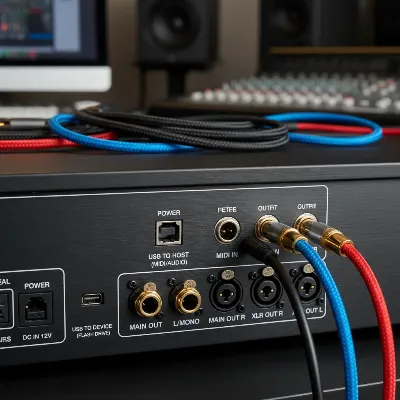 Close-up of a digital piano's back panel, showing various connectivity ports like USB, MIDI In/Out, and audio outputs, with focus on labels.
Where to Buy Digital Pianos
Purchasing a digital piano, especially for music production, requires careful consideration of the vendor to ensure you receive a quality instrument and reliable support.
Authorized Music Stores: These brick-and-mortar stores or online retailers specializing in musical instruments are often the best choice. They offer expert advice, allow you to test instruments in person, and provide warranties and after-sales support. Reputable stores like Sweetwater (USA) or local equivalents in your region offer a wide selection from top brands.
Manufacturer Websites: Buying directly from the manufacturer can sometimes offer exclusive deals or direct support, but may not have the same breadth of selection as a dedicated retailer.
Online Marketplaces: While platforms like Amazon offer convenience, it’s crucial to verify the seller’s reputation and ensure the product is new and covered by a full warranty. Be cautious of unofficial sellers.
Used Digital Pianos: Buying a used digital piano can be cost-effective, but comes with risks. Always inspect the instrument thoroughly for key functionality (no sticky keys, all sensors working), sound quality, and especially connectivity ports (USB, MIDI). Ask about its history, age, and if possible, test it with your own DAW setup. Reputable used gear marketplaces or local classifieds can yield good finds, but buyer beware.
Maintenance Tips for Your Digital Piano
Proper care will extend the life and performance of your digital piano, ensuring it remains a reliable tool for your music production.
- Keep it Clean: Regularly wipe down the keys and surface with a soft, dry, lint-free cloth. For stubborn grime on keys, a slightly damp cloth with mild soap can be used, but ensure no moisture seeps into the key mechanism. Avoid harsh chemicals or abrasive materials.
- Protect from Dust: Dust can interfere with key sensors and internal electronics. Use a dust cover when the piano is not in use.
- Control Environment: Digital pianos are sensitive to extreme temperature changes and humidity. Keep your piano in a stable environment, away from direct sunlight, heating vents, or open windows.
- Handle with Care: When moving a portable digital piano, always use a padded case. For console models, ensure they are placed on a stable, level surface.
- Cable Management: Keep cables organized and untangled to prevent damage to ports or tripping hazards. Disconnect cables by grasping the connector, not pulling the wire.
- Software Updates: Regularly check the manufacturer’s website for firmware updates. These can improve performance, add new features, or fix bugs, keeping your instrument current.
Conclusion
Choosing the best digital piano for music production is an investment in your creative journey. By prioritizing key features like expressive hammer-action keyboards, high polyphony, versatile sound engines, and robust MIDI and audio connectivity, you can find an instrument that not only inspires but also seamlessly integrates into your studio workflow. The market offers exceptional choices across all budget ranges, from feature-rich portable models ideal for compact studios to high-end hybrids that deliver an unparalleled acoustic feel. With careful consideration and a focus on your specific production needs, your digital piano can become the central hub for crafting compelling and professional-sounding music. What will you create next with your perfect digital piano?
Frequently Asked Questions
What is the most important feature in a digital piano for recording music?
For recording music, the most important features are a realistic, expressive key action (preferably fully weighted or hammer action) and robust, low-latency MIDI and audio connectivity (USB-MIDI or dedicated MIDI I/O, and quality line outputs or USB audio). These ensure accurate capture of your performance and seamless integration with your DAW.
Do I need built-in USB audio to record a digital piano?
While not strictly necessary, as you can often use line outputs with an external audio interface, built-in USB audio simplifies your setup by allowing direct stereo recording into your DAW with a single USB cable. This can be very convenient, especially for home studio users.
How much polyphony do I need for studio work?
For studio work, especially when layering sounds, using a sustain pedal, or creating complex arrangements with multiple tracks, a polyphony of 128 notes or more is highly recommended. This prevents notes from “stealing” polyphony and cutting off prematurely, ensuring your recordings sound full and natural.
Is Bluetooth MIDI/audio reliable for professional recording?
Bluetooth MIDI is generally reliable for basic control and non-critical practice. However, for professional recording where precise timing and minimal latency are crucial, a wired USB-MIDI or 5-pin MIDI connection is usually preferred. Bluetooth audio is more for casual listening than high-fidelity recording.
Can I use a digital piano as a MIDI controller with virtual instruments?
Absolutely. Most modern digital pianos come equipped with MIDI capabilities (USB-MIDI being the most common) that allow them to function as powerful MIDI controllers. This enables you to play and control a vast array of virtual instruments and software synthesizers within your DAW, greatly expanding your sound palette.
How does a digital piano compare to a dedicated MIDI controller for music production?
A digital piano offers a realistic, weighted key action and internal sounds, making it ideal for piano-centric performances and recording. A dedicated MIDI controller, while potentially lacking internal sounds, often provides more assignable knobs, faders, and pads, offering deeper hands-on control over DAW parameters and virtual instruments. Many producers use both or opt for a digital piano with strong MIDI controller features.
Get our weekly buyer guide
Practical specs, not advice. Unsubscribe anytime.

I got the Casio Privia PX-S1100, hoping for a compact solution for my small apartment studio. It’s definitely portable and the sound is decent, but I found the expressive control over virtual instruments a bit lacking compared to what I expected. It’s fine for basic tracking, but for more nuanced performances, I sometimes feel limited. Still, it’s a good entry-level option.
I picked up a Yamaha P-125 after reading about its MIDI and USB connectivity. It’s fantastic for controlling virtual instruments, and the key feel is surprisingly good for the price point. My only minor gripe is that I wish it had a few more built-in sounds, but for what I use it for in my production setup, it’s really hard to beat.
The Korg D1 is exactly what I needed for my professional setup. The durability is top-notch, and it feels like it can handle countless creative sessions. The focus on piano sounds is perfect for my workflow, and it connects seamlessly to all my gear. Highly recommend it if you’re looking for a no-frills, high-quality digital piano for production.
I’ve been using the Roland FP-30X mentioned here for a few months now, and it’s been a game-changer for my home studio. The authentic sound quality is incredible, and it integrates so smoothly with my DAW. I love having the headphone jack for late-night practice sessions without disturbing anyone. Definitely a solid recommendation for anyone serious about music production.