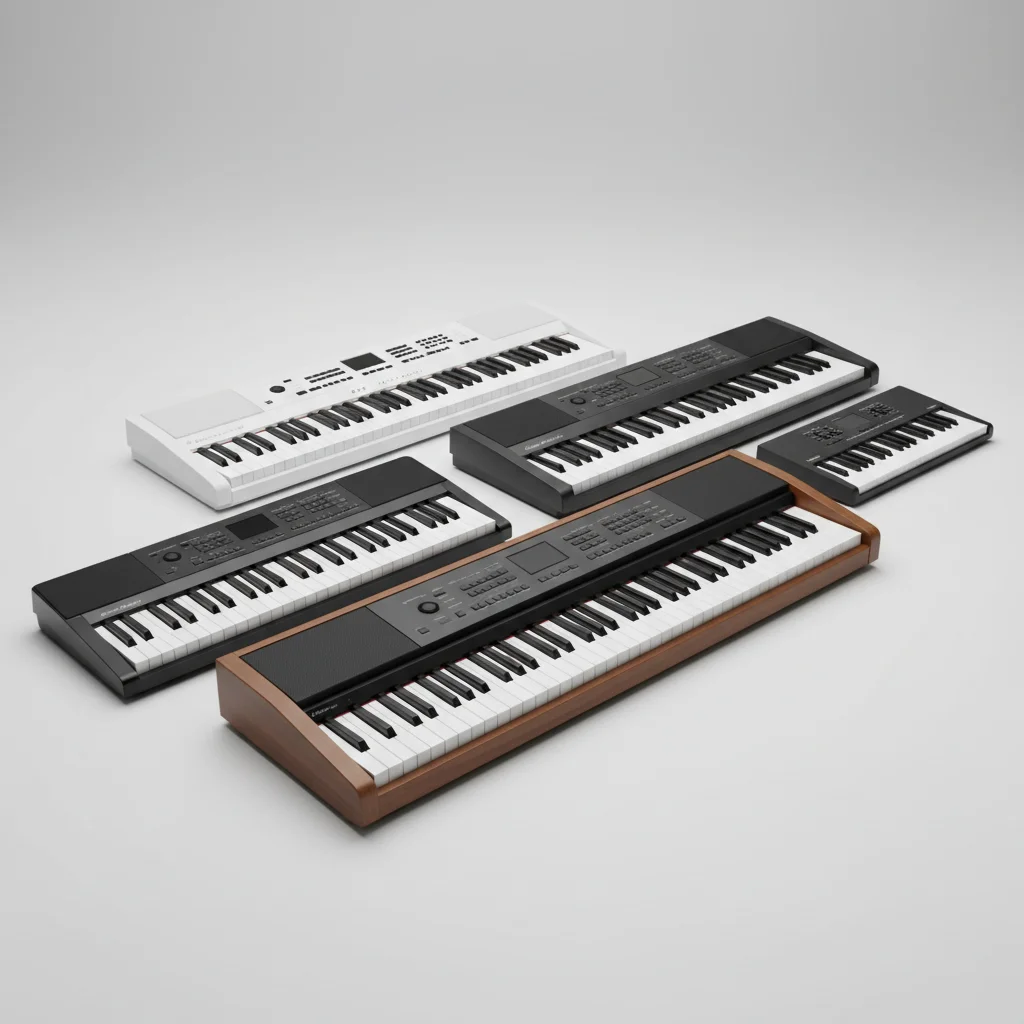
Not all digital piano keyboards have the same number of keys; in fact, there are typically three main key counts you’ll encounter: 88, 76, and 61 keys. The standard 88-key layout mirrors that of an acoustic grand piano, offering the full range of notes for classical pieces and advanced repertoire. However, many digital pianos, especially those designed for portability or specific musical genres, feature fewer keys. Understanding these differences is crucial for choosing an instrument that aligns with your musical goals and skill level.
Understanding the 88-Key Standard
The 88-key digital piano is considered the industry standard because it replicates the full range of an acoustic piano. This includes 52 white keys and 36 black keys, covering over seven octaves. For serious piano students, classical musicians, or anyone intending to play a wide variety of music, an 88-key instrument is often recommended. It ensures that no piece of music is out of reach due to a limited key range. Many 88-key models also feature weighted or hammer-action keys, further enhancing the authentic playing experience. For best digital pianos roundups on this site.
Exploring 76-Key Digital Pianos
Digital pianos with 76 keys offer a compromise between the full range of an 88-key model and the compact size of smaller keyboards. This configuration is often found in portable digital pianos and some stage pianos. While it omits the very lowest and highest notes of a full piano, 76 keys are still sufficient for a vast amount of music, including many pop songs, jazz standards, and even some classical pieces. They are a popular choice for musicians who need a lighter instrument for gigs or those with limited space, without sacrificing too much of the musical range.
The Role of 61-Key Keyboards
|
Our Picks for the Best Digital Piano in 2026
As an Amazon Associate I earn from qualifying purchases.
|
||
| Num | Product | Action |
|---|---|---|
| 1 | Yamaha P225 88-Key Digital Piano with Weighted Keys, Portable Design, Keyboard, Music Rest, Sustain Foot Switch, and Built-In Speakers, Black (P225B) |

|
| 2 | Rhymo Folding Piano Keyboard, 61 Keys Sensitive Electric Piano, Weighted Portable Electric Keyboards with Bluetooth MIDI, Digital Foldable Keyboard for Beginner (Black) |
|
| 3 | Yamaha 88-Key Digital Piano with Weighted Keys, Compact Design, Bluetooth, Keyboard, Music Rest, Sustain Foot Switch, and Built-in Speakers for Home Practice or Travel P145BT |
|
| 4 | Portable Piano Keyboard, Semi-Weighted Folding Digital Piano 88 Key, Full Size, Wood Grain, Electric Piano Keyboard w/MIDI Bluetooth, Suitable for Adult, Toddler |
|
| 5 | Yamaha 88-Key Weighted Portable Digital Piano Keyboard with Music Rest, Sustain Foot Switch, Built-in Speakers, USB Connectivity, Black (P45B) |
|
| 6 | 61 keys keyboard piano, Electronic Digital Piano with Built-In Speaker Microphone, Sheet Stand and Power Supply, Portable piano Keyboard Gift Teaching for Beginners |
|
| 7 | STRICH 88 Key Digital Piano Foldable Full Size Electric Keyboard with Semi-Weighted Sensitive Keys, Portable Electric Piano Set for Beginner, Bundle with Sustain Pedal, Headphones, Music Rest, SEP-88F |
|
| 8 | Alesis Melody 61 MK4 Keyboard Piano for Beginners with 61 Keys, Speakers, Stand, Bench, Headphones, Tablet/Sheet Music Stand, 300 Sounds and Music Lessons |
|
| 9 | Roland FP-10 | Compact 88-Note Digital Piano | SuperNATURAL Piano Tones | Authentic Acoustic Feel Keyboard | Great for Beginners & Experienced Players | Bluetooth & MIDI Connectivity |
|
| 10 | RockJam RJ761 61 Key Keyboard Piano with Keyboard Bench, Digital Piano Stool, Sustain Pedal, Headphones & Lessons |
|
Keyboards with 61 keys are typically found in entry-level digital pianos, synthesizers, and portable keyboards. These instruments are significantly more compact and lighter than their 88- or 76-key counterparts. While 61 keys are not ideal for traditional piano repertoire, they are perfectly suitable for beginners learning basic chords and melodies, exploring different instrument sounds, or producing electronic music. Many music educators recommend 61-key keyboards for young children starting their musical journey, as they are less intimidating and easier to navigate. They are also a common choice for producers and hobbyists who primarily use their keyboard for MIDI input or to trigger samples.
Why Key Count Matters for Different Players
The number of keys on a digital piano directly impacts its versatility and suitability for different players. For a beginner, a 61-key keyboard might be a great starting point, offering an affordable entry into music without overwhelming them. Intermediate players might find a 76-key model to be a good balance, providing enough range for most pieces while remaining portable. Advanced players and those serious about classical piano will almost certainly require an 88-key instrument to accommodate the full breadth of their repertoire. Consider your current skill level, your musical aspirations, and the types of music you plan to play when making your decision.
- 88 Keys: Ideal for classical piano, advanced players, and a full acoustic piano experience.
- 76 Keys: Suitable for intermediate players, gigging musicians, and those needing portability with a decent range.
- 61 Keys: Best for beginners, electronic music production, and very young learners.
- Portability: Fewer keys generally mean a lighter and more compact instrument.
- Repertoire: The key count dictates the range of music you can comfortably play.
Beyond Key Count: Other Considerations
While the number of keys is a primary factor, it’s not the only one to consider when choosing a digital piano. Key action (weighted, semi-weighted, synth-action) significantly affects the feel and playability. Sound quality, polyphony, built-in features like metronomes and recording capabilities, and connectivity options (USB, MIDI, audio outputs) are also important. For instance, a 61-key keyboard with excellent synth-action might be perfect for a producer, while an 88-key digital piano with fully weighted hammer action is essential for a classical pianist. Always try to play different models if possible to find the combination of key count, action, and features that best suits your personal preferences and musical needs.
Get our weekly buyer guide
Practical specs, not advice. Unsubscribe anytime.

I’ve been playing for years and always thought I needed an 88-key digital piano, but after reading about the different key counts, I decided to try a 76-key model for my small apartment. It’s perfect! The portability is a huge plus, and I honestly don’t miss those extra keys for the pop and jazz I mostly play. Great advice on matching the instrument to your musical goals.
I got a 61-key digital piano for my son who’s just starting out, thinking it would be fine. While it’s good for basic practice, I do wish it had a few more keys. He’s already trying to play some simple classical pieces, and we’re running into limitations with the range. It’s okay for now, but we’ll definitely need to upgrade to something with more keys sooner than I expected.
I’m primarily a guitarist but wanted to add some piano skills. I was looking for something compact and affordable. The info on how 61-key models are great for specific genres or just messing around really resonated with me. I picked up a 61-key digital piano, and it’s exactly what I needed to experiment with chords and melodies without taking up too much space.
As a beginner, I was really confused about how many keys to get. I almost bought a cheap 61-key keyboard, but I’m glad I held off. The explanation about the 88-key standard being best for serious students and classical music really helped me make up my mind. I ended up getting an 88-key model, and I feel like I made the right investment for long-term learning.