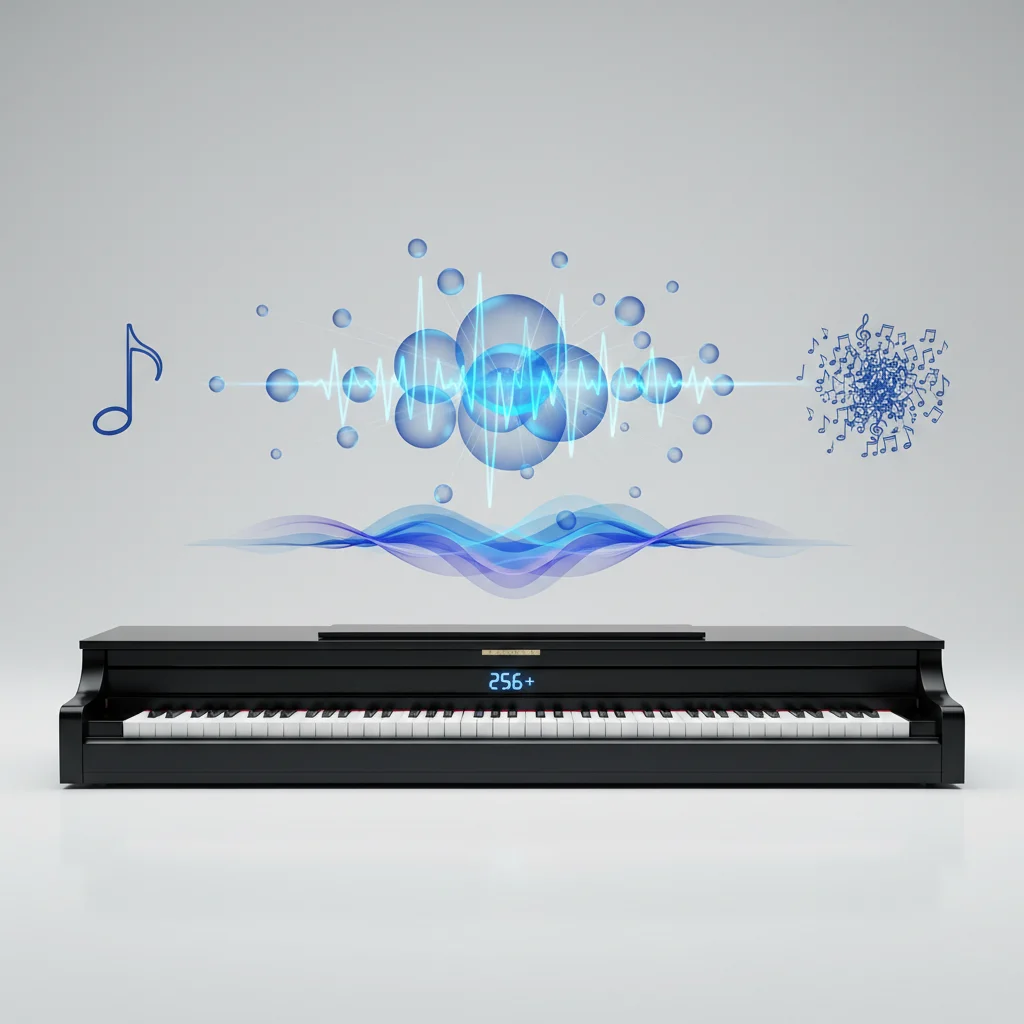
Digital piano polyphony refers to the maximum number of individual notes a digital piano can produce simultaneously. For most players, a polyphony of 128 notes is more than sufficient, providing ample capacity for complex pieces, layered sounds, and sustained chords without notes cutting out prematurely. Understanding this feature is crucial for ensuring your digital piano can handle your playing style and musical aspirations.
What is Polyphony and Why Does it Matter?
Polyphony is essentially the ‘voice count’ of your digital piano. Each note you play, each sustain pedal press, and even layered sounds (like piano and strings played together) consume a voice. If your piano’s polyphony limit is reached, older notes will be cut off to make way for new ones, leading to an unnatural and choppy sound. This is particularly noticeable in pieces with many sustained notes, fast passages, or when using the sustain pedal extensively. For compare top digital pianos on this site.
While 64-note polyphony might seem adequate for beginners playing simple melodies, it can quickly become a limitation as you progress. More advanced pieces often involve complex harmonies, rapid arpeggios, and the use of multiple voices simultaneously, especially when layering different instrument sounds. A higher polyphony count ensures a richer, more continuous sound experience.
Common Polyphony Levels and Their Uses
Digital pianos typically come with polyphony levels ranging from 32 to 256 notes, or even higher in professional models. Here’s a breakdown of what each level generally offers:
- 32-64 Notes: Suitable for absolute beginners playing simple, single-voice melodies. You’ll likely encounter note drop-outs with sustained chords or layered sounds.
- 128 Notes: This is the sweet spot for most intermediate to advanced players. It comfortably handles complex classical pieces, jazz improvisations, and layered sounds without issues.
- 192-256+ Notes: Found in high-end digital pianos and stage pianos, these levels are ideal for professional musicians, composers, and those who frequently use multi-layered sounds, split keyboards, or advanced MIDI sequencing.
Consider your current skill level and future ambitions when evaluating polyphony. Investing in a piano with at least 128-note polyphony is a wise choice for long-term satisfaction.
How Polyphony Affects Layered Sounds and Effects
|
Our Picks for the Best Digital Piano in 2026
As an Amazon Associate I earn from qualifying purchases.
|
||
| Num | Product | Action |
|---|---|---|
| 1 | Yamaha 88-Key Weighted Portable Digital Piano Keyboard with Music Rest, Sustain Foot Switch, Built-in Speakers, USB Connectivity, Black (P45B) |

|
| 2 | Portable Piano Keyboard, Semi-Weighted Folding Digital Piano 88 Key, Full Size, Wood Grain, Electric Piano Keyboard w/MIDI Bluetooth, Suitable for Adult, Toddler |
|
| 3 | Yamaha 88-Key Digital Piano with Weighted Keys, Compact Design, Bluetooth, Keyboard, Music Rest, Sustain Foot Switch, and Built-in Speakers for Home Practice or Travel P145BT |
|
| 4 | Rhymo Folding Piano Keyboard, 61 Keys Sensitive Electric Piano, Weighted Portable Electric Keyboards with Bluetooth MIDI, Digital Foldable Keyboard for Beginner (Black) |
|
| 5 | Yamaha P225 88-Key Digital Piano with Weighted Keys, Portable Design, Keyboard, Music Rest, Sustain Foot Switch, and Built-In Speakers, Black (P225B) |
|
| 6 | Roland FP-10 | Compact 88-Note Digital Piano | SuperNATURAL Piano Tones | Authentic Acoustic Feel Keyboard | Great for Beginners & Experienced Players | Bluetooth & MIDI Connectivity |
|
| 7 | Alesis Melody 61 MK4 Keyboard Piano for Beginners with 61 Keys, Speakers, Stand, Bench, Headphones, Tablet/Sheet Music Stand, 300 Sounds and Music Lessons |
|
| 8 | RockJam RJ761 61 Key Keyboard Piano with Keyboard Bench, Digital Piano Stool, Sustain Pedal, Headphones & Lessons |
|
| 9 | 61 keys keyboard piano, Electronic Digital Piano with Built-In Speaker Microphone, Sheet Stand and Power Supply, Portable piano Keyboard Gift Teaching for Beginners |
|
| 10 | STRICH 88 Key Digital Piano Foldable Full Size Electric Keyboard with Semi-Weighted Sensitive Keys, Portable Electric Piano Set for Beginner, Bundle with Sustain Pedal, Headphones, Music Rest, SEP-88F |
|
When you layer two sounds, such as a piano and a string ensemble, each key press consumes two voices from your polyphony count. If you play a 10-note chord with two layered sounds, you’re already using 20 voices. Add in the sustain pedal, and those voices remain active until the sound naturally decays or the polyphony limit is reached. This is where lower polyphony counts quickly become a bottleneck.
Furthermore, some digital pianos use additional voices for built-in effects like reverb and chorus, although this is less common in modern instruments. Always check the specifications to understand how the polyphony is utilized. For serious practice and performance, especially with rich, layered textures, a higher polyphony count ensures your music sounds full and uninterrupted.
Testing Polyphony in Practice
The best way to understand the impact of polyphony is to test it yourself. Play a complex piece with many sustained notes and heavy pedal use. If you notice notes suddenly cutting out or disappearing, your piano’s polyphony might be insufficient for that particular piece or playing style. Try layering two sounds and playing a full, sustained chord; if the sound thins out or notes drop, it’s a clear indicator of a polyphony limitation.
While a higher number generally means better performance, remember that other factors like sound quality, key action, and features also contribute to the overall playing experience. Polyphony is one important piece of the puzzle, ensuring your musical expression isn’t limited by technical constraints.
Making the Right Choice for Your Needs
For most aspiring and intermediate pianists, a digital piano with 128-note polyphony offers an excellent balance of performance and value. It provides enough headroom for growth and complex musical pieces without being an unnecessary expense. If you’re a professional or frequently engage in advanced music production with multiple layers and MIDI tracks, then 192 or 256+ notes would be a more suitable choice.
Ultimately, the ‘right’ amount of polyphony depends on your individual playing style and musical goals. Don’t underestimate its importance, as it directly impacts the richness and continuity of your sound.Always check the specifications and, if possible, try out different models to hear the difference for yourself.
Get our weekly buyer guide
Practical specs, not advice. Unsubscribe anytime.

This was super helpful. I’m a beginner but I’m already noticing some choppiness when I try to layer sounds on my current keyboard. I thought it was just me! Knowing that 128 notes is a good benchmark for most players gives me a clear target when I’m shopping around.
Good info on polyphony, but I wish there was a bit more detail on how it affects different brands. I have a Yamaha P-45 and sometimes I still notice notes dropping out, even though it’s supposed to have 64-note polyphony. Maybe it’s just my playing style, but it’s a bit frustrating.
I’ve always wondered about polyphony and this really cleared things up. My old digital piano had a terrible habit of cutting off notes during complex pieces, especially when I used the sustain pedal. Now I understand why! I’m definitely looking for something with at least 128 notes for my next upgrade.
I’m so glad I read this before buying my new digital piano. I was about to get a cheaper model with lower polyphony, but now I understand how crucial it is for sustained chords and fast passages. I definitely want to avoid that unnatural, choppy sound, so I’m investing in a model with higher voice count.