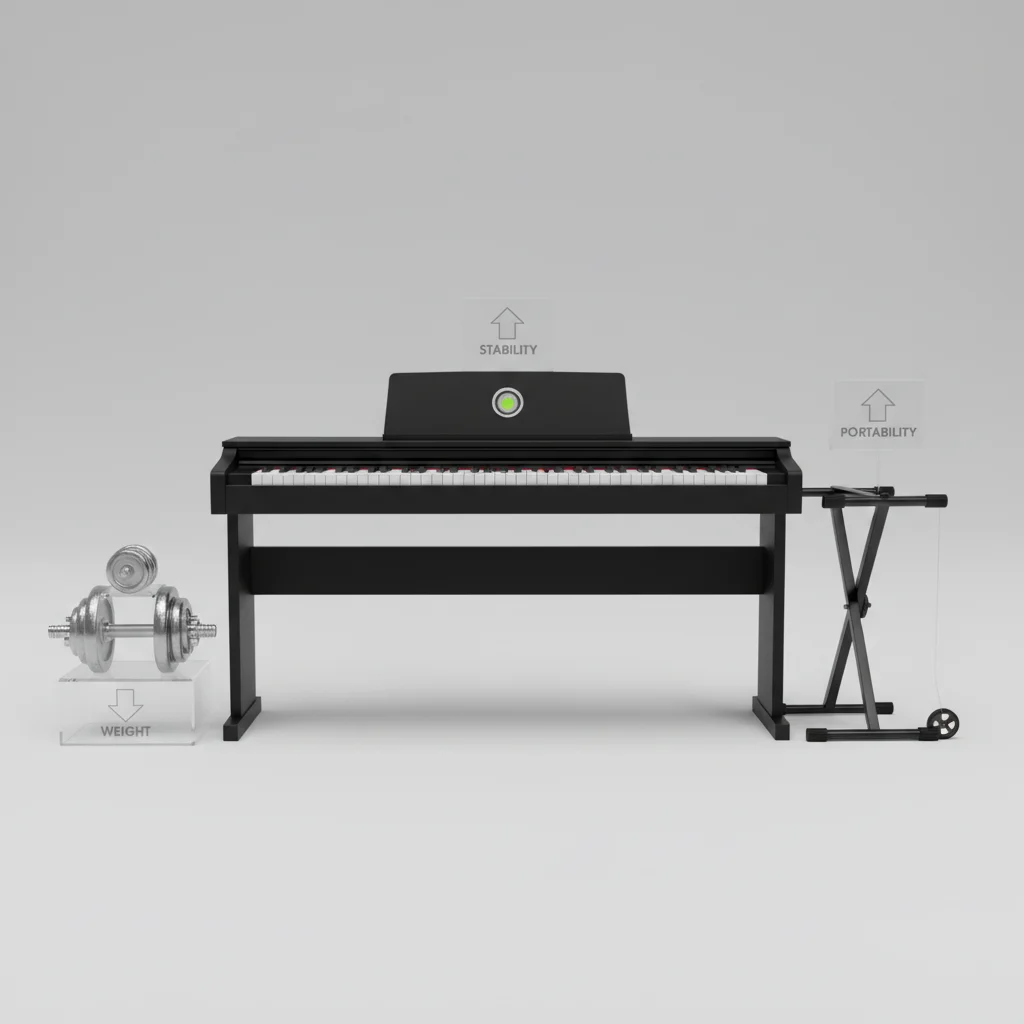
The weight of a digital piano significantly impacts both its portability and stability, with most models ranging from 10 to 60 pounds. Lighter pianos, typically under 25 pounds, are ideal for musicians who need to transport their instrument frequently for gigs or lessons. Conversely, heavier models, often exceeding 40 pounds, offer enhanced stability, a more robust feel, and are generally preferred for permanent home setups where a solid playing experience is paramount.
Understanding the Impact of Weight on Portability
For musicians on the go, the weight of a digital piano is a critical factor. Lightweight digital pianos, often designed as stage pianos or portable keyboards, prioritize ease of transport. These instruments typically feature compact designs and use lighter materials, making them simple to carry to rehearsals, performances, or even different rooms within a home. However, this portability can sometimes come at the cost of a less substantial feel, both in the keys and the overall build. Consider how often you’ll be moving your piano and the distances involved when evaluating lighter options.
Conversely, a heavier digital piano can be a significant deterrent for frequent transport. While some heavier models might have optional cases with wheels, they still require more effort to move. If your primary use case involves setting up the piano in one location and rarely moving it, the added weight becomes less of a concern and can even be an advantage for stability.
How Weight Influences Playing Stability
A heavier digital piano generally provides superior stability during play. This is particularly important for pianists who play with a strong touch or prefer a more grounded feel. The added mass helps prevent the piano from shifting or wobbling, especially when placed on a dedicated stand. This stability contributes to a more immersive and comfortable playing experience, mimicking the solid feel of an acoustic piano.
Lighter digital pianos, while portable, can sometimes feel less stable, especially if placed on a flimsy stand. Aggressive playing or even just the natural movement of hands can cause a lighter instrument to shift slightly, which can be distracting. For serious practice or performance, a stable instrument is crucial for maintaining focus and proper technique. Investing in a sturdy stand is often recommended for lighter models to mitigate this potential issue.
Weight and Build Quality: What’s the Connection?
|
Our Picks for the Best Digital Piano in 2026
As an Amazon Associate I earn from qualifying purchases.
|
||
| Num | Product | Action |
|---|---|---|
| 1 | 61 keys keyboard piano, Electronic Digital Piano with Built-In Speaker Microphone, Sheet Stand and Power Supply, Portable piano Keyboard Gift Teaching for Beginners |

|
| 2 | Roland FP-10 | Compact 88-Note Digital Piano | SuperNATURAL Piano Tones | Authentic Acoustic Feel Keyboard | Great for Beginners & Experienced Players | Bluetooth & MIDI Connectivity |
|
| 3 | Rhymo Folding Piano Keyboard, 61 Keys Sensitive Electric Piano, Weighted Portable Electric Keyboards with Bluetooth MIDI, Digital Foldable Keyboard for Beginner (Black) |
|
| 4 | Portable Piano Keyboard, Semi-Weighted Folding Digital Piano 88 Key, Full Size, Wood Grain, Electric Piano Keyboard w/MIDI Bluetooth, Suitable for Adult, Toddler |
|
| 5 | STRICH 88 Key Digital Piano Foldable Full Size Electric Keyboard with Semi-Weighted Sensitive Keys, Portable Electric Piano Set for Beginner, Bundle with Sustain Pedal, Headphones, Music Rest, SEP-88F |
|
| 6 | Yamaha 88-Key Digital Piano with Weighted Keys, Compact Design, Bluetooth, Keyboard, Music Rest, Sustain Foot Switch, and Built-in Speakers for Home Practice or Travel P145BT |
|
| 7 | Alesis Melody 61 MK4 Keyboard Piano for Beginners with 61 Keys, Speakers, Stand, Bench, Headphones, Tablet/Sheet Music Stand, 300 Sounds and Music Lessons |
|
| 8 | Yamaha 88-Key Weighted Portable Digital Piano Keyboard with Music Rest, Sustain Foot Switch, Built-in Speakers, USB Connectivity, Black (P45B) |
|
| 9 | RockJam RJ761 61 Key Keyboard Piano with Keyboard Bench, Digital Piano Stool, Sustain Pedal, Headphones & Lessons |
|
| 10 | Yamaha P225 88-Key Digital Piano with Weighted Keys, Portable Design, Keyboard, Music Rest, Sustain Foot Switch, and Built-In Speakers, Black (P225B) |
|
The weight of a digital piano is often, though not always, indicative of its build quality and the materials used. Heavier pianos frequently incorporate more robust components, such as a more substantial key action mechanism, higher-quality speakers, and denser cabinet materials. These elements contribute to both the instrument’s longevity and its acoustic properties. For example, a digital piano with a full-weighted hammer action will inherently be heavier than one with a semi-weighted or synth-action keyboard due to the mechanical components involved.
However, advancements in technology mean that some lighter pianos can still offer excellent sound quality and features. Manufacturers are constantly innovating to reduce weight without compromising performance. It’s important to look beyond just the weight specification and consider the overall construction, key action, and sound engine when assessing quality.
The Role of Weight in Different Digital Piano Types
Different types of digital pianos have varying typical weight ranges. Portable digital pianos, designed for gigging musicians, are usually the lightest, often under 30 pounds. Console digital pianos, intended for home use and designed to resemble acoustic pianos, are significantly heavier, often exceeding 80 pounds, due to their integrated stands and larger cabinets. Stage pianos, while portable, can be heavier than basic portable keyboards due to more robust construction and professional-grade features. Understanding these distinctions helps in choosing a piano with appropriate weight for your specific needs.
- Portable Keyboards: Typically 10-25 lbs, ideal for travel and casual use.
- Stage Pianos: Often 25-50 lbs, built for durability and performance on the road.
- Console Digital Pianos: Can range from 50-150+ lbs, designed for permanent home placement.
- Slab Digital Pianos (without stand): Usually 20-40 lbs, offering a balance of portability and features.
- Hybrid Digital Pianos: Can be very heavy, often over 100 lbs, due to incorporating acoustic piano components.
Finding the Right Balance for Your Needs
Ultimately, the ideal digital piano weight depends entirely on your individual circumstances and priorities. If you’re a student who needs to take your piano to lessons, a lighter, more portable option is likely best. If you’re setting up a dedicated practice space at home and rarely plan to move the instrument, a heavier, more stable console model might be preferable. Consider your living situation, your transportation methods, and your playing style when making your decision. It’s a trade-off between convenience and a grounded playing experience.
Many musicians find a middle ground, opting for a slab digital piano that offers a good key action and sound, which can be paired with a sturdy, separate stand for home use, and then easily detached for occasional transport. This flexibility allows for the best of both worlds.For those prioritizing a truly authentic feel and minimal movement, a heavier, furniture-style digital piano will provide the most satisfying experience.
Get our weekly buyer guide
Practical specs, not advice. Unsubscribe anytime.

I’ve been lugging around an old acoustic for years, and finally decided to switch to a digital. This post really helped me understand the weight differences. I ended up getting a model around 20 pounds, and it’s been a game-changer for my weekly band practices. So much easier to transport without sacrificing sound quality.
As a beginner, I wasn’t sure how much weight mattered, but the explanation about portability versus stability made a lot of sense. I chose a mid-range model around 30 pounds, and it’s been perfect for moving between my living room and my bedroom. It feels sturdy enough for me, and I don’t have to worry about it tipping over.
I was looking for something stable for my home studio, and the info about heavier models being better for permanent setups was spot on. My new digital piano is over 45 pounds and it feels incredibly solid. The only minor thing is that I wish it had a few more built-in sounds, but for stability, it’s perfect.
I needed something super light for gigs, so I went with a model under 15 pounds. It’s definitely portable, which is great, but I do notice a bit more wobble when I’m really getting into a piece. It’s not a deal-breaker, but it’s something to consider if you’re a heavy player. Still, for the price and portability, it’s decent.