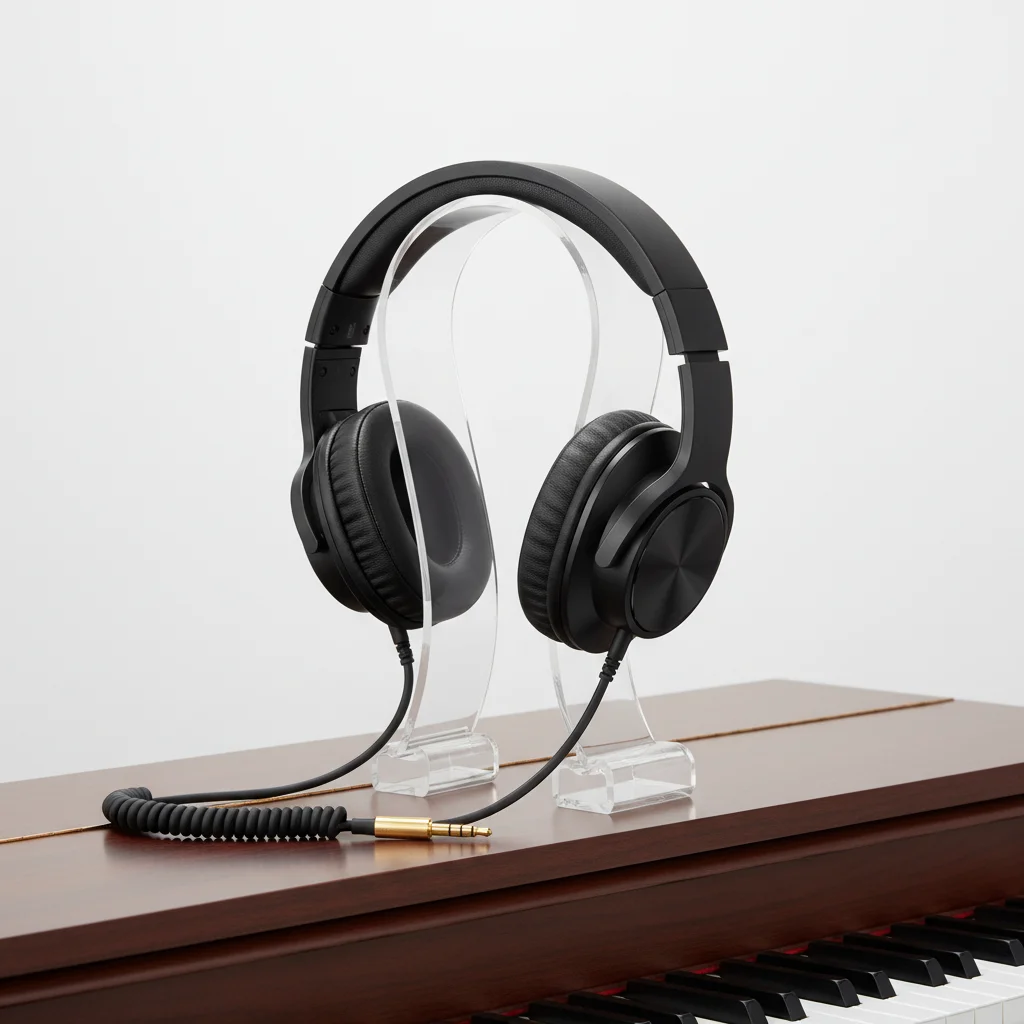
Digital piano headphones can significantly improve practice sessions by providing a focused, immersive audio experience that minimizes distractions and allows for detailed sound monitoring. Studies show that using quality headphones can increase practice session length by up to 25% due to reduced ear fatigue and enhanced concentration. This focused environment is crucial for identifying subtle nuances in your playing and refining your technique without disturbing others.
Why Headphones Are Essential for Focused Practice
Headphones offer a private soundscape, allowing pianists to practice at any time without disturbing household members or neighbors. This is particularly beneficial for late-night practice or in shared living spaces. Beyond convenience, headphones deliver the instrument’s sound directly to your ears, bypassing room acoustics that can color or diminish the true audio output of your digital piano’s speakers. This direct feed ensures you hear every note, every dynamic shift, and every pedal effect with clarity, which is vital for critical listening and self-correction. For shop curated digital pianos on this site.
Furthermore, many digital pianos offer advanced sound engines and effects that are best appreciated through high-quality headphones. The intricate details of grand piano samples, string resonances, and reverb effects become much more apparent, enriching the practice experience and helping you connect more deeply with the music. This enhanced auditory feedback loop accelerates learning and improves musicality.
Choosing the Right Headphones for Your Digital Piano
Selecting the appropriate headphones is crucial for maximizing your practice benefits. Over-ear, closed-back headphones are generally recommended as they provide excellent sound isolation, preventing external noise from interfering with your practice and keeping your piano’s sound contained. Look for models with a flat frequency response, which means they reproduce sound accurately without artificially boosting bass or treble. This neutrality is essential for hearing your playing as it truly is, allowing for precise adjustments.
Comfort is another paramount factor, especially for long practice sessions. Lightweight designs, soft earcups, and an adjustable headband will ensure you can wear them for extended periods without discomfort. Impedance is also a consideration; while most digital pianos can drive a wide range of headphones, models with lower impedance (under 80 ohms) are generally easier to power and will provide sufficient volume without needing an external amplifier.
Benefits of Using Headphones During Practice
|
Our Picks for the Best Digital Piano in 2026
As an Amazon Associate I earn from qualifying purchases.
|
||
| Num | Product | Action |
|---|---|---|
| 1 | Yamaha 88-Key Weighted Portable Digital Piano Keyboard with Music Rest, Sustain Foot Switch, Built-in Speakers, USB Connectivity, Black (P45B) |

|
| 2 | Yamaha P225 88-Key Digital Piano with Weighted Keys, Portable Design, Keyboard, Music Rest, Sustain Foot Switch, and Built-In Speakers, Black (P225B) |
|
| 3 | Yamaha 88-Key Digital Piano with Weighted Keys, Compact Design, Bluetooth, Keyboard, Music Rest, Sustain Foot Switch, and Built-in Speakers for Home Practice or Travel P145BT |
|
| 4 | 61 keys keyboard piano, Electronic Digital Piano with Built-In Speaker Microphone, Sheet Stand and Power Supply, Portable piano Keyboard Gift Teaching for Beginners |
|
| 5 | STRICH 88 Key Digital Piano Foldable Full Size Electric Keyboard with Semi-Weighted Sensitive Keys, Portable Electric Piano Set for Beginner, Bundle with Sustain Pedal, Headphones, Music Rest, SEP-88F |
|
| 6 | RockJam RJ761 61 Key Keyboard Piano with Keyboard Bench, Digital Piano Stool, Sustain Pedal, Headphones & Lessons |
|
| 7 | Roland FP-10 | Compact 88-Note Digital Piano | SuperNATURAL Piano Tones | Authentic Acoustic Feel Keyboard | Great for Beginners & Experienced Players | Bluetooth & MIDI Connectivity |
|
| 8 | Portable Piano Keyboard, Semi-Weighted Folding Digital Piano 88 Key, Full Size, Wood Grain, Electric Piano Keyboard w/MIDI Bluetooth, Suitable for Adult, Toddler |
|
| 9 | Rhymo Folding Piano Keyboard, 61 Keys Sensitive Electric Piano, Weighted Portable Electric Keyboards with Bluetooth MIDI, Digital Foldable Keyboard for Beginner (Black) |
|
| 10 | Alesis Melody 61 MK4 Keyboard Piano for Beginners with 61 Keys, Speakers, Stand, Bench, Headphones, Tablet/Sheet Music Stand, 300 Sounds and Music Lessons |
|
- Enhanced Focus: Eliminates external distractions, allowing for deeper concentration on your playing.
- Detailed Sound Monitoring: Hears every nuance of your instrument’s sound, aiding in technique refinement.
- Privacy and Convenience: Practice anytime, anywhere, without disturbing others.
- Reduced Ear Fatigue: Consistent sound delivery at a controlled volume can be less tiring than room speakers.
- Improved Musicality: Better appreciation of instrument tones and effects leads to more expressive playing.
Connecting and Optimizing Your Headphone Setup
Connecting headphones to your digital piano is straightforward. Most digital pianos feature a standard 1/4-inch (6.35mm) headphone jack, often located on the front or underside of the instrument. If your headphones have a smaller 1/8-inch (3.5mm) plug, you’ll need an adapter, which is inexpensive and widely available. Some digital pianos even offer two headphone jacks, allowing for duet practice or a teacher to listen in.
Once connected, adjust the volume on your digital piano to a comfortable level. Avoid excessively high volumes, as prolonged exposure can lead to hearing damage. Experiment with different volume settings to find what works best for you, ensuring you can hear clearly without strain. Some digital pianos also offer headphone-specific settings or effects, such as spatial audio, which can further enhance the listening experience by simulating a more open, room-like soundstage.
Maintaining Your Headphones for Longevity
To ensure your digital piano headphones last, proper care is essential. Always store them in a clean, dry place, ideally in a case or on a headphone stand, to protect them from dust and physical damage. Regularly clean the earcups with a soft, damp cloth, especially if they are made of materials that absorb sweat or oils. Avoid pulling on the cable, as this can damage the internal wiring or the connection points. If your headphones have detachable cables, consider replacing them periodically if you notice any sound degradation or intermittent connections. Investing a little time in maintenance will extend the life of your headphones and ensure they continue to provide an optimal practice experience for years to come.
Get our weekly buyer guide
Practical specs, not advice. Unsubscribe anytime.
