The Yamaha P-145 digital piano is an excellent choice for beginners and intermediate players seeking a high-quality, portable instrument. It features a newly designed Graded Hammer Compact (GHC) keyboard action that mimics an acoustic grand piano’s feel and includes the rich, detailed sound of the CFIIIS concert grand. Weighing just 11.1 kg (24.5 lbs), it offers exceptional portability and integrates with the Smart Pianist app for enhanced functionality, making it a strong contender for its accessible price point.
Introduction to Digital Pianos
Digital pianos are modern instruments that replicate the sound and feel of traditional acoustic pianos using advanced technology. Unlike acoustic pianos, which use hammers striking strings, digital pianos employ sophisticated sampling techniques and weighted key actions to simulate rich, resonant tones and tactile response. Their popularity stems from portability, lower maintenance, silent practice with headphones, and a wider array of sounds and features.
The history of digital pianos shows continuous innovation, evolving from basic electronic keyboards to refined instruments that faithfully reproduce concert grand nuances. They offer an accessible entry point into piano playing by removing barriers like high cost, large size, and frequent tuning. While acoustic pianos provide an unparalleled organic experience, digital pianos offer immense versatility and practicality for contemporary musicians, educators, and students. For expert digital pianos reviews on this site.
Types of Digital Pianos
The digital piano market caters to diverse needs, broadly categorized into several types, each with distinct characteristics.
Portable Digital Pianos
The Yamaha P-145 perfectly embodies the essence of a portable digital piano. These instruments are designed for ease of transport and space-saving, often featuring a compact, lightweight body. They are characterized by 88 weighted keys, essential piano sounds, and built-in speakers, but they can be easily detached from an optional stand and moved. Portable pianos are ideal for students, gigging musicians, or anyone with limited space who still demands an authentic piano playing experience. Their main advantages include flexibility and affordability, though they might compromise slightly on speaker power or furniture-like aesthetics compared to home models.
Home Digital Pianos
These models are designed to be a permanent fixture in a home, often housed in an attractive cabinet that mimics the look of an upright piano. They typically feature more powerful speaker systems and a more robust, stable feel. While they offer an immersive playing experience, their size and weight make them less portable than their counterparts.
Stage Pianos
Built for professional musicians, stage pianos prioritize performance features, connectivity, and durability for live gigs. They often lack built-in speakers, relying on external amplification, and provide extensive sound libraries and sound manipulation capabilities.
Hybrid Digital Pianos
|
Our Picks for the Best Digital Piano in 2026
As an Amazon Associate I earn from qualifying purchases.
|
||
| Num | Product | Action |
|---|---|---|
| 1 | Yamaha P225 88-Key Digital Piano with Weighted Keys, Portable Design, Keyboard, Music Rest, Sustain Foot Switch, and Built-In Speakers, Black (P225B) |

|
| 2 | Portable Piano Keyboard, Semi-Weighted Folding Digital Piano 88 Key, Full Size, Wood Grain, Electric Piano Keyboard w/MIDI Bluetooth, Suitable for Adult, Toddler |
|
| 3 | STRICH 88 Key Digital Piano Foldable Full Size Electric Keyboard with Semi-Weighted Sensitive Keys, Portable Electric Piano Set for Beginner, Bundle with Sustain Pedal, Headphones, Music Rest, SEP-88F |
|
| 4 | 61 keys keyboard piano, Electronic Digital Piano with Built-In Speaker Microphone, Sheet Stand and Power Supply, Portable piano Keyboard Gift Teaching for Beginners |
|
| 5 | RockJam RJ761 61 Key Keyboard Piano with Keyboard Bench, Digital Piano Stool, Sustain Pedal, Headphones & Lessons |
|
| 6 | Roland FP-10 | Compact 88-Note Digital Piano | SuperNATURAL Piano Tones | Authentic Acoustic Feel Keyboard | Great for Beginners & Experienced Players | Bluetooth & MIDI Connectivity |
|
| 7 | Yamaha 88-Key Digital Piano with Weighted Keys, Compact Design, Bluetooth, Keyboard, Music Rest, Sustain Foot Switch, and Built-in Speakers for Home Practice or Travel P145BT |
|
| 8 | Alesis Melody 61 MK4 Keyboard Piano for Beginners with 61 Keys, Speakers, Stand, Bench, Headphones, Tablet/Sheet Music Stand, 300 Sounds and Music Lessons |
|
| 9 | Rhymo Folding Piano Keyboard, 61 Keys Sensitive Electric Piano, Weighted Portable Electric Keyboards with Bluetooth MIDI, Digital Foldable Keyboard for Beginner (Black) |
|
| 10 | Yamaha 88-Key Weighted Portable Digital Piano Keyboard with Music Rest, Sustain Foot Switch, Built-in Speakers, USB Connectivity, Black (P45B) |
|
Hybrid pianos bridge the gap between acoustic and digital, incorporating real acoustic piano actions and wooden keys combined with digital sound engines. They offer an incredibly authentic playing feel and premium sound but come at a significantly higher price point.
The Yamaha P-145, firmly in the portable category, focuses on delivering essential quality and playability without the bulk, making it an excellent choice for a wide audience.
Leading Digital Piano Brands
When considering a digital piano, several brands consistently receive acclaim for their quality and innovation. Yamaha, Roland, Casio, and Kawai are among the most respected.
Yamaha, with its rich heritage in acoustic piano manufacturing, brings decades of expertise to its digital instruments. The brand is renowned for its realistic keyboard actions, authentic piano sounds (often sampled from its own concert grand pianos), and robust build quality. Yamaha digital pianos, including the P-145, are particularly favored by beginners and intermediate players for their reliability and intuitive design.
Roland is celebrated for its SuperNATURAL sound engine and advanced keyboard actions that provide a nuanced playing experience. Casio offers excellent value, often packing a surprising array of features and quality into budget-friendly models. Kawai is highly regarded for its wooden key actions and rich, expressive piano sounds, often appealing to more advanced players seeking an acoustic-like feel.
The Yamaha P-145’s strengths lie in its accessible price point combined with a newly developed, highly playable action and a stellar primary piano voice, setting a high standard for entry-level portable digital pianos.
Key Features of the Yamaha P-145 Digital Piano
The Yamaha P-145 digital piano is engineered to provide an authentic and engaging playing experience through a careful selection of features, focusing on what truly matters for pianists.
Sound Quality
At the heart of the P-145’s sonic prowess is its CFIIIS Concert Grand Piano voice. This represents a significant upgrade from its predecessor, utilizing samples from Yamaha’s acclaimed CFIIIS concert grand. The result is an impressively full, detailed, and authentic piano sound that resonates with clarity and depth. The P-145 also incorporates a damper resonance function, which intelligently reproduces the rich, sympathetic vibrations that occur when the damper pedal is pressed on an acoustic piano, adding realism and expressiveness to your playing.
While the primary piano sound is spectacular, the P-145 offers 10 instrument presets, including electric pianos, organs, and strings, providing versatility for various musical styles. For an entry-level instrument, the sound quality is a standout feature, particularly when considering its price point. It boasts 64-note polyphony, meaning up to 64 notes can sound simultaneously. While some higher-end models offer more, 64-note polyphony is generally sufficient for solo piano playing and most beginner to intermediate repertoire.
Keyboard Action
The P-145 features Yamaha’s newly developed Graded Hammer Compact (GHC) keyboard. This 88-key weighted action is meticulously designed to mimic the feel of an acoustic grand piano, where the keys in the lower registers are heavier and gradually become lighter towards the higher registers. This “graded” weighting is crucial for developing proper finger technique and strength. The GHC action offers a relatively firm resistance, typical of Yamaha, which helps players build strong, clean finger technique from the outset. Its touch sensitivity is excellently graded, allowing for precise translation of your dynamic expression, whether you play softly or with power. While some professional players might notice the shorter pivot point of compact actions, for its category, the GHC keyboard provides a highly realistic and satisfying feel. The keytops feature a matte black finish for a comfortable touch.
Features & Connectivity
The P-145 is streamlined for ease of use, making it approachable for beginners. It includes a built-in metronome—an invaluable tool for practicing rhythm and timing. Dual mode allows you to layer two different sounds, such as piano and strings, for richer textures, while Duo mode splits the keyboard into two identical pitch ranges, perfect for student-teacher lessons.
Connectivity is practical and modern. The standard P-145 includes a USB-to-Host port for MIDI and audio transfer to a computer, a headphone output for silent practice, and a sustain pedal input. For those seeking enhanced wireless capabilities, the P-145BT model integrates Bluetooth audio and MIDI, allowing seamless connection to smart devices. This enables you to play along to your favorite tracks or utilize educational apps like Yamaha’s Smart Pianist app. This app revolutionizes operation by providing a graphical interface for controlling piano functions, accessing scores, and learning new songs. The Rec’n’share app also allows you to record high-quality audio directly to your smart device, ideal for sharing performances.
Design & Durability
Yamaha has redesigned the P-145 with a focus on modern aesthetics and enhanced portability. It boasts a much shorter and thinner body compared to its predecessors, making it incredibly compact and lightweight at just 11.1 kg (24.5 lbs). This makes it highly portable, easy to set up on a simple keyboard stand, and move when needed. The minimalist design features only essential buttons—a power switch, a volume knob, and a function button—with most other settings managed via key combinations or the intuitive Smart Pianist app. The sturdy, robust craftsmanship that Yamaha is known for ensures the P-145 is built to last, providing a dependable instrument for years of musical enjoyment.
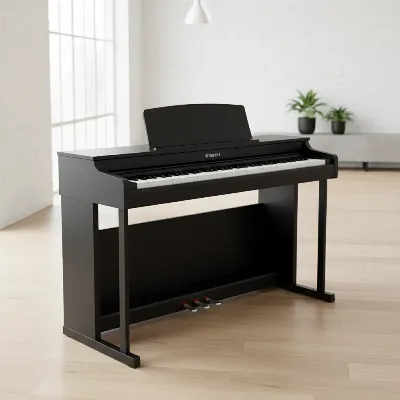 Yamaha P-145 digital piano with a minimalist design, compact size, and lightweight frame, highlighting its portability.
Buying Guide: Yamaha P-145 by Budget
Understanding where the Yamaha P-145 fits within various budget considerations can help you make an informed decision.
Entry-Level (Under $500 – $600 USD)
The Yamaha P-145 is an exemplary choice in the entry-level segment. Priced competitively, it offers exceptional value for money, making it ideal for absolute beginners or those transitioning from an unweighted keyboard. At this price point, the P-145 provides a highly realistic GHC weighted action and the premium CFIIIS grand piano sound, features often found in more expensive models. While it includes a basic footswitch pedal, budgeting for a better sustain pedal is highly recommended to enhance the playing experience. For its cost, the P-145 delivers a foundational instrument that can support a student’s development for many years.
Mid-Range ($600 – $1200 USD)
Moving into the mid-range, you typically find instruments like the Yamaha P-225 or Roland FP-30X. These often offer higher polyphony (e.g., 192 notes), more advanced keyboard actions (like Yamaha’s GHS, or Roland’s PHA-4 Standard), a larger selection of sounds, and more powerful speaker systems. The P-145 serves as an excellent starting point, but if your budget allows for more features, richer sound, or a slightly more refined action, exploring this segment might be worthwhile.
High-End (Above $1200 USD)
High-end digital pianos, such as the Yamaha P-525 or Kawai ES920, cater to professionals and discerning enthusiasts. They feature premium wooden key actions, cutting-edge sound engines with advanced resonance modeling, extensive sound libraries, and superior speaker configurations. While the P-145 provides a solid foundation, these instruments offer an even closer approximation to the acoustic grand piano experience in every aspect.
The P-145 positions itself as a strong contender for those on a beginner’s budget, delivering core quality and essential features that allow for serious musical development without a hefty investment.
 A beginner pianist practicing on a Yamaha P-145 digital piano, showing a focused and engaged learning experience.
Where to Buy Your Digital Piano
Acquiring a digital piano like the Yamaha P-145 requires careful consideration of purchase avenues to ensure reliability and good service.
Reputable Music Stores
Purchasing from an established music store, either local or a national chain, offers several benefits. You can physically test the instrument, assess the key feel and sound, and compare it with other models. Knowledgeable staff can provide personalized advice, and these stores typically offer warranties, after-sales support, and sometimes even beginner lesson packages. This is often the best option for first-time buyers who need hands-on experience and guidance.
Online Retailers
Major online music retailers and large e-commerce platforms often provide competitive pricing and a wider selection. They offer convenience, with instruments shipped directly to your door. When buying online, ensure the retailer has a clear return policy and that the product is covered by the manufacturer’s warranty. Look for retailers specializing in musical instruments, as they are more likely to offer reliable service and genuine products. The P-145 is readily available from many online vendors, including those offering the P-145BT with Bluetooth.
Buying Used Digital Pianos
While the P-145 is a relatively new model, buying used instruments can be cost-effective for other models. However, it comes with risks, such as unknown wear and tear, lack of warranty, and potential hidden issues. If considering a used purchase, thoroughly inspect the instrument, test all keys and functions, and ideally have an experienced person accompany you.
For the Yamaha P-145, especially given its entry-level price, buying new from a reputable source is generally recommended to leverage its warranty and ensure you receive the latest, unblemished model.
Maintenance Tips for Your Digital Piano
Digital pianos are generally low-maintenance compared to acoustic pianos, but proper care can significantly extend their lifespan and preserve their playability.
General Care and Placement
- Temperature and Humidity: Avoid extreme fluctuations in temperature and humidity, as these can affect electronic components. Place your piano in a stable environment, away from direct sunlight, heating vents, or open windows.
- Dust Protection: Dust is the enemy of electronics. When not in use, cover your digital piano with a dust cover to prevent dust from accumulating on keys and within internal mechanisms.
- Power Supply: Use the correct power adapter provided by the manufacturer. If using an extension cord or power strip, ensure it’s surge protected to guard against electrical spikes.
- Avoid Liquids: Keep drinks and other liquids away from the piano to prevent spills that could damage electronics.
Cleaning the Keyboard and Body
- Keys: For routine cleaning, gently wipe the keys with a soft, dry, lint-free cloth. For deeper cleaning, slightly dampen a soft cloth with water (or a very mild soap solution) and wipe the keys, then immediately dry them with another clean, dry cloth. Avoid abrasive cleaners, solvents, or excessive moisture, as these can damage the key surfaces or seep into the instrument.
- Body: Wipe down the body of the piano with a soft, dry cloth. If necessary, a slightly damp cloth followed by a dry one can be used for fingerprints or light smudges. Avoid spraying cleaners directly onto the instrument.
By following these simple maintenance tips, your Yamaha P-145 will continue to provide an optimal playing experience for many years.
Conclusion
The Yamaha P-145 digital piano emerges as a highly compelling choice, particularly for aspiring pianists and those seeking a high-quality, portable instrument without a prohibitive price tag. Its newly designed Graded Hammer Compact (GHC) keyboard delivers a remarkably authentic acoustic piano feel, essential for developing proper technique. Coupled with the rich, detailed sound of the CFIIIS concert grand and intelligent features like damper resonance, the P-145 offers an immersive musical experience. Its compact, lightweight design and integration with the Smart Pianist app further enhance its appeal, providing both portability and modern convenience.
While it is an entry-level model with 64-note polyphony and a focused set of voices, the P-145 excels in its core mission: delivering a dependable and enjoyable piano playing experience. If you are a beginner ready to embark on your musical journey or an experienced player needing a practice instrument that prioritizes feel and sound, the Yamaha P-145 is undoubtedly a strong contender for your consideration. What aspects of a digital piano do you value most in your playing experience?
Frequently Asked Questions
Is the Yamaha P-145 a good digital piano for beginners?
Absolutely, the Yamaha P-145 is specifically designed as an excellent entry-level digital piano for beginners. It features a realistic GHC weighted key action and authentic grand piano sounds, which are crucial for developing proper technique and musicality from the start.
What is the main difference between the Yamaha P-145 and its predecessor, the P-45?
The P-145 offers significant upgrades over the P-45, including a new, more compact GHC keyboard action for improved feel, a higher-quality CFIIIS grand piano sound engine with damper resonance, and enhanced connectivity, particularly with the Smart Pianist app. It also boasts a slimmer, more modern design.
Does the Yamaha P-145 have weighted keys?
Yes, the Yamaha P-145 features a Graded Hammer Compact (GHC) keyboard with 88 fully weighted keys. These keys are weighted to feel heavier in the lower registers and lighter in the higher registers, accurately simulating the touch response of an acoustic grand piano.
Can I connect the Yamaha P-145 to a computer or smart device?
Yes, the P-145 includes a USB-to-Host port for both MIDI and audio transfer to a computer. The P-145BT model further adds built-in Bluetooth audio and MIDI, allowing seamless wireless connection to smart devices for use with apps like Smart Pianist and Rec’n’share.
How many different sounds does the Yamaha P-145 offer?
The Yamaha P-145 provides 10 instrument presets, including its primary CFIIIS concert grand piano voice, along with various electric pianos, organs, and string sounds. While not extensive, these essential voices cover a good range for practice and performance.
Is the Yamaha P-145 portable?
Yes, the P-145 is designed for portability. It has a significantly shorter, thinner, and lighter body, weighing only 11.1 kg (24.5 lbs). This makes it easy to transport for lessons, gigs, or simply moving around your home.
What is the polyphony of the Yamaha P-145?
The Yamaha P-145 has 64-note polyphony. This means it can produce up to 64 simultaneous notes, which is generally sufficient for most solo piano pieces and common musical arrangements, especially for beginners and intermediate players.
Frequently Asked Questions
Is the Yamaha P-145 a good digital piano for beginners?
Absolutely, the Yamaha P-145 is specifically designed as an excellent entry-level digital piano for beginners. It features a realistic GHC weighted key action and authentic grand piano sounds, which are crucial for developing proper technique and musicality from the start.
What is the main difference between the Yamaha P-145 and its predecessor, the P-45?
The P-145 offers significant upgrades over the P-45, including a new, more compact GHC keyboard action for improved feel, a higher-quality CFIIIS grand piano sound engine with damper resonance, and enhanced connectivity, particularly with the Smart Pianist app. It also boasts a slimmer, more modern design.
Does the Yamaha P-145 have weighted keys?
Yes, the Yamaha P-145 features a Graded Hammer Compact (GHC) keyboard with 88 fully weighted keys. These keys are weighted to feel heavier in the lower registers and lighter in the higher registers, accurately simulating the touch response of an acoustic grand piano.
Can I connect the Yamaha P-145 to a computer or smart device?
Yes, the P-145 includes a USB-to-Host port for both MIDI and audio transfer to a computer. The P-145BT model further adds built-in Bluetooth audio and MIDI, allowing seamless wireless connection to smart devices for use with apps like Smart Pianist and Rec'n'share.
How many different sounds does the Yamaha P-145 offer?
The Yamaha P-145 provides 10 instrument presets, including its primary CFIIIS concert grand piano voice, along with various electric pianos, organs, and string sounds. While not extensive, these essential voices cover a good range for practice and performance.
Is the Yamaha P-145 portable?
Yes, the P-145 is designed for portability. It has a significantly shorter, thinner, and lighter body, weighing only 11.1 kg (24.5 lbs). This makes it easy to transport for lessons, gigs, or simply moving around your home.
Maintain Your Yamaha P-145 Digital Piano
Proper care for your Yamaha P-145 digital piano can significantly extend its lifespan and preserve its playability, ensuring years of musical enjoyment.
Place your piano in a stable environment, away from direct sunlight, heating vents, or open windows to avoid extreme temperature and humidity fluctuations. When not in use, cover your digital piano with a dust cover to prevent dust accumulation on keys and internal mechanisms.
Always use the correct power adapter provided by Yamaha. If using an extension cord or power strip, ensure it is surge protected to guard against electrical spikes. Keep drinks and other liquids away from the piano to prevent spills that could damage electronic components.
For routine cleaning, gently wipe the keys with a soft, dry, lint-free cloth. For deeper cleaning, slightly dampen a soft cloth with water (or a very mild soap solution), wipe the keys, and immediately dry them. Avoid abrasive cleaners or excessive moisture. Wipe the piano body with a soft, dry cloth, using a slightly damp cloth for smudges if necessary, but never spray cleaners directly onto the instrument.
Get our weekly buyer guide
Practical specs, not advice. Unsubscribe anytime.

I’ve been looking for a portable digital piano for ages, and the Yamaha P-145 is perfect. The 11.1 kg weight makes it so easy to take to lessons and gigs. The sound of the CFIIIS concert grand is absolutely stunning, really rich and full. It’s a fantastic instrument for the price.
As an intermediate player, I was really impressed with the Graded Hammer Compact (GHC) keyboard action. It feels very close to an acoustic piano, which is what I was hoping for. The integration with the Smart Pianist app is a nice bonus for practicing. My only minor quibble is that I wish it came with a sustain pedal that felt a bit more robust.
I got the P-145 as my first digital piano, and it’s mostly great for a beginner. The sound quality is good, and it’s easy to set up. However, I found the built-in speakers to be a little lacking in volume when I’m playing with other instruments. I usually have to use headphones to get the full experience.
This Yamaha P-145 is a game-changer for my home studio. The detailed sound of the CFIIIS concert grand is incredibly inspiring, and it records beautifully. For its accessible price point, you’re getting a lot of professional features. Definitely recommend it for anyone serious about their playing.